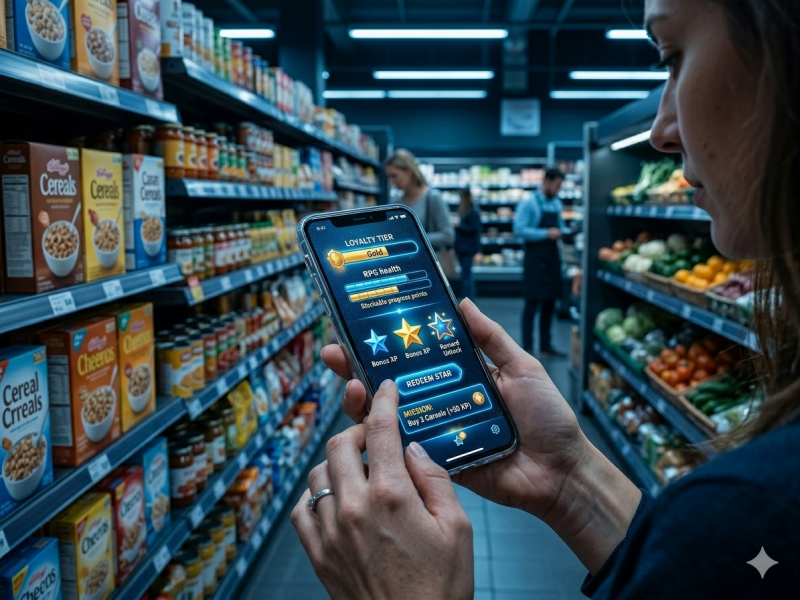



A B2C loyalty program is often treated as a discount engine: give customers points, hand out coupons, and hope they come back. But a well-designed B2C loyalty program does much more than that. It turns one-time shoppers into repeat buyers, gives you rich first-party data on what your customers want, and grows revenue by increasing how often and how much they spend. It also makes it easier to compete on experience instead of price.
Below, we cover the nine key B2C loyalty program benefits: retention, repeat purchases, first-party data, lower acquisition costs, brand advocacy, differentiation, customer lifetime value, personalization, and measurable ROI.
9 B2C Loyalty Program Benefits
1. Increases Customer Retention
Customers who earn points, unlock tiers, and receive member-only perks have a concrete reason to come back instead of trying a competitor. A B2C loyalty program builds that habit by rewarding every return visit, not just big purchases. The payoff is significant: research by Frederick Reichheld of Bain & Company, cited by Harvard Business Review, found that increasing customer retention by 5% increases profits by 25% to 95%. Even small gains in retention compound over time.
2. Drives Repeat Purchases and Higher Average Order Value
Points thresholds, tier goals, and bonus offers give members a reason to buy more often and add one more item to the cart. A 2020 McKinsey survey found that members of free loyalty programs are 30% more likely to spend more on a brand after joining, and members of paid programs are 60% more likely. Offers like "spend $100, earn double points" push basket size up without deep discounts.
3. Gives You First-Party Customer Data
Every enrollment, purchase, redemption, and profile update adds to a database of first-party data you own. You learn who your best customers are, what they buy, how often, and which offers they respond to. For example, a fashion retailer can see which members buy new arrivals in the first week and invite them to early-access launches. The same data also improves inventory planning, pricing, and promotion decisions.
4. Reduces Customer Acquisition Cost Over Time
Acquiring a new customer is five to 25 times more expensive than retaining an existing one, according to Harvard Business Review. A loyalty program shifts more of your revenue to customers you already have, so each marketing dollar works harder. Sign-up bonuses and referral rewards also help bring in new customers, with members doing part of the recruiting for you.
5. Creates Brand Advocates Through Referral Programs
Loyal customers recommend brands they love, and referral rewards give them a reason to do it more often. A refer-a-friend program that rewards both the referrer and the new customer turns that goodwill into measurable growth. Word of mouth carries real weight: McKinsey found it is the primary factor behind 20% to 50% of all purchasing decisions. Learn more about customer advocacy programs.
6. Helps Differentiate from Competitors
When competitors can match your products and prices, the experience around the purchase becomes your edge. A loyalty program adds value customers can't get elsewhere, such as exclusive rewards, members-only events, early access, and personalized offers. For example, a hotel brand that gives members free upgrades and late checkout gives guests a reason to book direct and stay loyal rather than shop on price. See how this works in hospitality loyalty programs.
7. Improves Customer Lifetime Value
Customer lifetime value grows when customers stay longer, buy more often, and spend more per visit, and a B2C loyalty program influences all three. Tiered programs work especially well because each new level gives members a reason to keep engaging year after year. For example, McKinsey reports that the average member of CVS's paid CarePass program spends 15% to 20% more after joining. Higher lifetime value also means you can afford to invest more in serving your best customers.
8. Enables Personalized Marketing and Offers
Loyalty data shows what each member buys and values, so you can send offers that match their interests instead of generic blasts. Customers expect it: McKinsey found that 71% of consumers expect personalized interactions, and personalization most often drives a 10% to 15% revenue lift. With Fielo Customer Loyalty, you can segment members and trigger tailored rewards, messages, and promotions based on their behavior.
9. Provides Measurable Program ROI
Unlike many brand-building efforts, a loyalty program produces clear numbers. B2C loyalty software tracks enrollment, active members, redemption rates, and member versus non-member spend, so you can see what the program returns. For example, comparing the purchase frequency of members and non-members in the same customer segment shows the program's incremental revenue. Those insights let you cut rewards that don't perform and invest more in those that do.
With vs Without a B2C Loyalty Program
Compare how a brand performs with and without a customer loyalty program B2C shoppers actually value.
Metric
Without a B2C Loyalty Program
With a B2C Loyalty Program
Customer retention rate
Customers drift to competitors after one or two purchases
Points, tiers, and perks give customers a reason to return
Repeat purchase rate
Repeat buying depends on promotions and discounts
Rewards and tier goals encourage more frequent purchases
Customer data depth
Limited to transaction records, often anonymous
Rich first-party profiles: purchases, preferences, and redemptions
Marketing personalization
Generic, one-size-fits-all campaigns
Offers tailored to each member's behavior and tier
Brand switching risk
High: customers switch for a lower price
Lower: switching means giving up points and status
Conclusion
A well-run B2C loyalty program pays for itself. It keeps customers coming back, raises how often and how much they spend, and delivers first-party data that makes every campaign more effective. With the right B2C loyalty software, those gains are measurable, so you can prove ROI and keep improving the program over time. See how Fielo helps consumer brands build loyalty programs that drive retention and revenue.
FAQs
What is a B2C loyalty program?
A B2C loyalty program is a structured program that rewards consumers for purchases and engagement with a brand. Members typically earn points, discounts, tier status, or exclusive perks, which encourage them to keep buying from the same brand instead of competitors.
What is the difference between B2C and B2B loyalty programs?
B2C loyalty programs reward individual consumers, usually for purchases, referrals, and engagement, and often serve large member bases. B2B loyalty programs reward business customers or channel partners, such as distributors and resellers, and focus on longer sales cycles, larger orders, and account-level relationships. Fielo supports both through its Customer Loyalty and Channel Performance solutions.
How much does a B2C loyalty program cost?
Costs vary widely by program size, reward budget, and technology. The main components are the loyalty software platform, implementation and integration, the rewards themselves, and ongoing marketing and management. For Fielo's options, see Customer Loyalty pricing.
What metrics should you track for a B2C loyalty program?
Track enrollment rate, active member rate, purchase frequency, average order value, redemption rate, retention or churn rate, customer lifetime value, and incremental revenue from members compared with non-members. Together, these show whether the program changes behavior and pays off.
Can a B2C loyalty program work for small businesses?
Yes. Small businesses can start with a simple points or punch-card program and add tiers or referrals as they grow. The key is offering rewards customers value and keeping the rules easy to understand. Cloud-based loyalty software also makes it affordable to launch without building custom technology.