


Most companies that sell through partners run some kind of partner program, but results vary widely from one program to the next. The difference rarely comes down to budget: the best channel partner programs, and the channel incentive program at their core, share a common set of features that average programs lack. They make the rules easy to understand, reward partners in proportion to the value they bring, and give everyone real-time visibility into performance. They also run on automation instead of spreadsheets.
In this guide, you'll find the eight channel partner program features that top-performing programs have in common, plus a quick checklist to evaluate your own program. For inspiration, see these successful channel partner program examples.
What Makes a Channel Partner Program Successful?
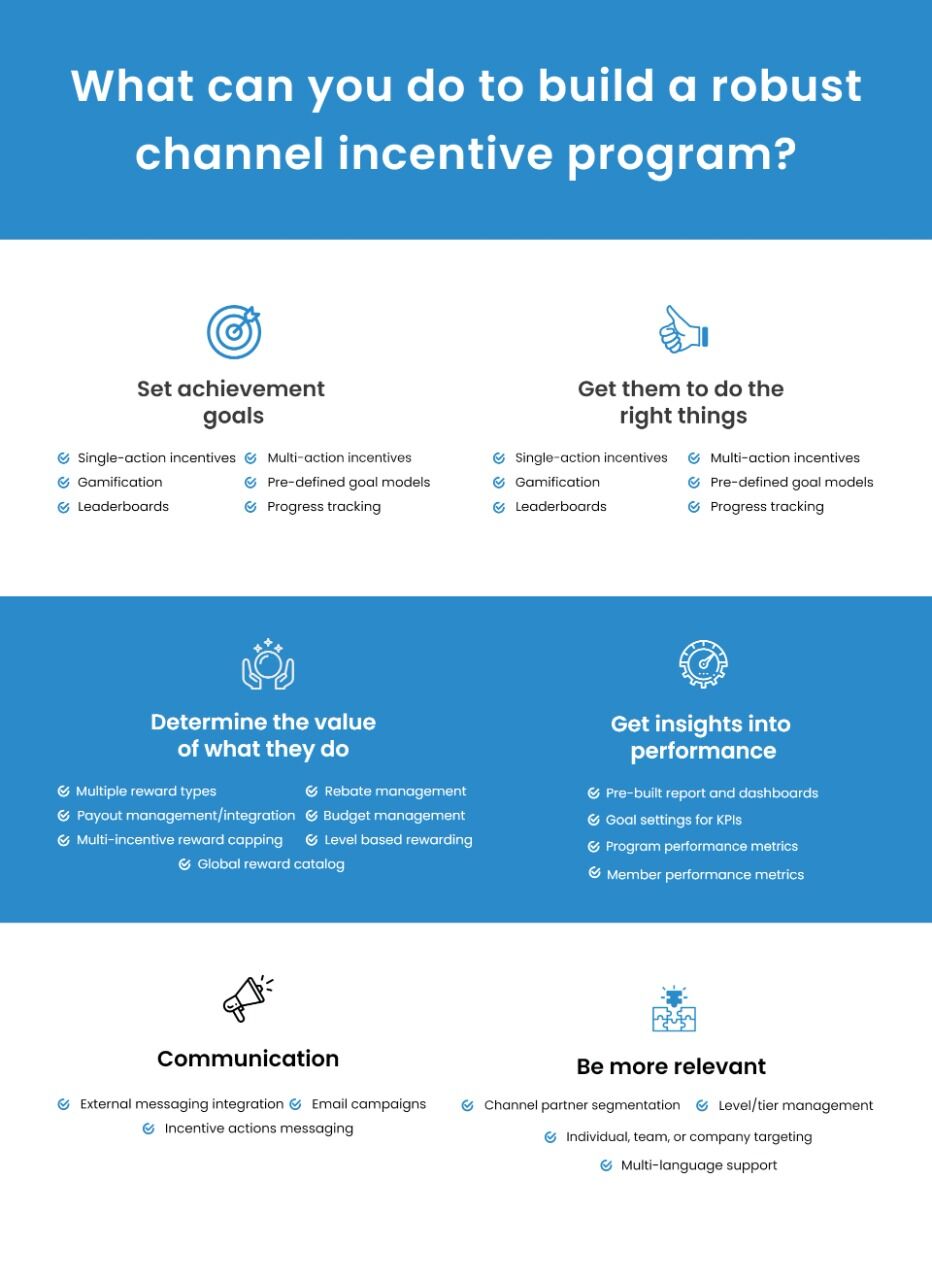
Successful programs go beyond rewards. The best channel partner incentive programs combine four elements: automation that calculates and pays rewards accurately, communication that keeps partners informed about rules and promotions, tiered recognition that gives partners a clear path to grow, and real-time data that shows both sides what's working. Rewards alone can spark a short-term sales spike, but these elements turn that spike into lasting engagement. When one is missing, partners lose trust, interest, or visibility, and participation drops.
Top Features of High-Performing Channel Partner Programs
These eight channel partner program features show up again and again in the best channel partner programs.
1. Clear and Simple Program Rules
Partners can't chase goals they don't understand. The best programs explain eligibility, earning rules, and payout timing in plain language, and limit each promotion to a few behaviors. A good test: a partner rep should be able to explain how to earn in two sentences. Simple rules also mean fewer support questions and payout disputes.
2. Tiered Reward Structures That Match Partner Value
Tiers such as Silver, Gold, and Platinum reward partners in proportion to the value they bring. Higher tiers unlock better margins, rebate acceleration, priority support, or more leads, giving partners a clear reason to grow. Base advancement on more than revenue, including training, deal registration, and customer satisfaction. Segmented goals also keep smaller partners motivated instead of competing against your largest ones.
3. A Mix of Financial and Non-Financial Incentives
Rebates, SPIFFs, and bonuses drive quick action, but cash alone builds little loyalty. Top programs add non-financial rewards such as recognition, merchandise, incentive trips, and early access to new products. Market development funds (MDF) round out the mix by helping partners promote your brand locally. Because different partners value different rewards, offer choices.
4. Real-Time Partner Dashboards and Analytics
Partners stay engaged when they can see their progress toward the next reward or tier at any moment. Dashboards that show sales, points, rebates, and rankings in real time remove guesswork and reduce support requests. On the vendor side, analytics reveal which partners, products, and incentives perform best. That visibility lets you adjust promotions mid-quarter instead of waiting for year-end results.
5. Automated Incentive Calculation and Payouts
Manual tracking in spreadsheets causes errors, slow payouts, and disputes that erode partner trust. Automation applies your rules to sales data, calculates rewards based on growth, tiers, or fixed and percentage amounts, and routes payouts through approval workflows. Fielo's Incentives Automation does this natively in Salesforce, so your channel incentive program can scale to thousands of partners and promotions without adding headcount.
6. Training and Certification Modules Built Into the Program
Partners sell what they understand. Building courses, quizzes, and certifications into the program lets you reward learning as well as sales, so partners are motivated to complete training. Linking certifications to tier status or bonus points turns product knowledge into a measurable, rewarded behavior. A learning management system connected to your incentives makes this seamless.
7. A Branded Partner Portal for Program Access
A partner portal gives partners one place to enroll, check rules, track progress, complete training, and redeem rewards. Branding it with your company's look keeps your brand front and center every time partners log in. Fielo's Partner Portal brings incentives, learning, and content together in a single experience, so partners don't have to juggle multiple logins.
8. Integration with CRM (Especially Salesforce)
When your program lives outside your CRM, partner and sales data end up split across systems and reconciled by hand. CRM integration means rewards are calculated from the same deals and accounts your sales team already tracks. Fielo is built natively on Salesforce, so incentive data, partner records, and opportunities share one source of truth, with no syncing or duplicate data entry.
How to Evaluate Your Current Channel Partner Program
Use these six questions to check how your current program measures up against the best channel partner programs:
- ☐ Can partners explain how to earn rewards in two sentences or less?
- ☐ Can partners see their progress toward rewards and tiers in real time?
- ☐ Are rewards calculated accurately and paid on a predictable schedule?
- ☐ Do your tiers and goals work for partners of every size, not just your largest ones?
- ☐ Are training and certifications part of how partners earn rewards?
- ☐ Is program data connected to your CRM, or reconciled manually in spreadsheets?
If you answered "no" to two or more questions, your program is probably leaving partner engagement and revenue on the table. Automation closes most of these gaps at once by applying rules consistently, paying on time, and giving partners and channel managers real-time visibility.
Conclusion
The right features turn a channel partner program from a cost center into a growth engine. Clear rules, tiered rewards, a balanced incentive mix, and built-in training give partners reasons to engage, while dashboards, a branded portal, and CRM integration give both sides the visibility to keep improving. Automation ties it all together, keeping rewards accurate and the program scalable as your channel grows. See how Fielo helps you build a channel incentive program with all of these features, natively on Salesforce.
FAQs
What are the key features of a successful channel partner program?
The key features are clear and simple rules, tiered rewards that match partner value, a mix of financial and non-financial incentives, real-time dashboards, automated reward calculation and payouts, built-in training and certifications, a branded partner portal, and CRM integration. Together, they make a program easy to join, simple to follow, and rewarding to stay in.
How do tiered incentives improve partner performance?
Tiered incentives give partners a visible path to better rewards, such as higher margins, rebate acceleration, or priority support. That path motivates partners to improve their performance to reach the next level. Tiers also let you invest more in your most valuable partners while keeping goals achievable for smaller ones.
Why is CRM integration important for channel incentive programs?
CRM integration lets you calculate rewards from the same deals, accounts, and opportunities your sales team already tracks. It removes manual data transfers, reduces errors and payout disputes, and gives you a single view of partner performance and program cost.
What is a partner portal?
A partner portal is a secure website where channel partners access everything related to your program. Partners use it to enroll, read program rules, track sales and rewards, complete training, download sales and marketing content, and redeem rewards.
How does automation improve channel incentive program ROI?
Automation lowers administration costs by replacing manual tracking and calculations. Accurate, on-time payouts build partner trust, which raises participation. Real-time data also shows which incentives actually drive sales, so you can shift budget away from rewards that don't change behavior.