
Loyalty marketing is the practice of building long-term customer relationships through personalized experiences, rewards, and consistent engagement that encourage repeat business. By focusing on customer retention rather than one-time sales, businesses create stronger relationships that lead to higher lifetime value, increased advocacy, and sustainable growth.
For more on building lasting customer relationships, explore our article How Customer Loyalty Drives Long-Term Business Growth.
Acquiring new customers is important, but long-term business success depends on keeping existing customers engaged. Loyalty marketing helps businesses strengthen relationships, increase repeat revenue, and encourage customers to become advocates for the brand.
When customers consistently receive value beyond the initial purchase, they are more likely to return, spend more, and recommend the business to others.
Successful loyalty marketing goes beyond points and rewards. Emotional connection is what transforms satisfied customers into loyal advocates who continue choosing a brand even when competitors offer similar products or lower prices.
Brands build emotional loyalty by delivering personalized experiences, demonstrating authenticity, and consistently meeting customer expectations. When customers feel understood and appreciated, they develop stronger trust and are more likely to remain loyal over time.
Learn more in our article Emotional Connection in Customer Loyalty: Why It Matters, where we explore how emotional relationships create lasting brand loyalty.
Every successful loyalty marketing strategy starts with understanding customer needs and designing experiences around them.
Collecting and analyzing customer data helps businesses understand preferences, behaviors, and purchasing patterns. These insights allow brands to deliver more relevant experiences that strengthen customer relationships.
Customers expect a seamless experience across every touchpoint, whether they're shopping online, using a mobile app, or speaking with customer support. Consistency reinforces trust and builds confidence in the brand.
Personalized communications, recommendations, and rewards help customers feel recognized as individuals. Personalization increases relevance and strengthens long-term loyalty.
Feedback provides valuable insights into customer expectations and pain points. Businesses that actively listen and make improvements demonstrate that they value customer relationships.
Modern loyalty marketing extends beyond rewarding purchases. Brands increasingly recognize referrals, reviews, social engagement, and other interactions that deepen customer relationships.
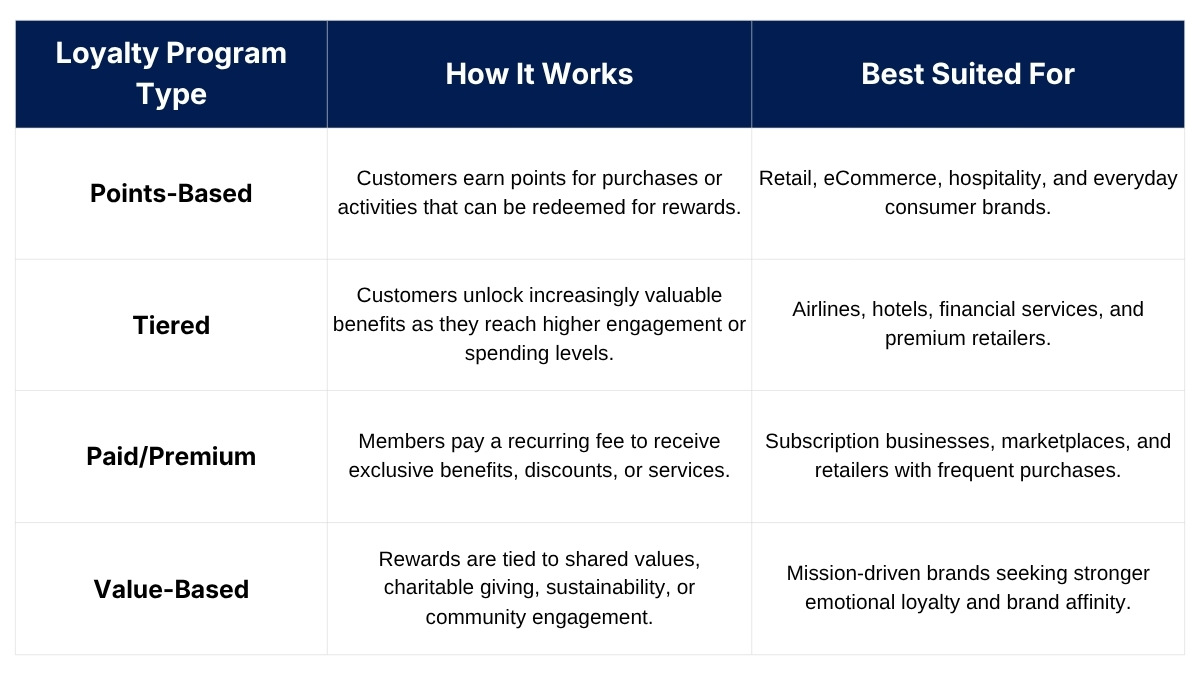
Selecting the right loyalty program depends on your customers' behaviors, purchase frequency, and overall business objectives.
Tailor communications, product recommendations, and rewards based on customer preferences and purchase history. Personalized experiences increase engagement and make customers feel valued.
Create consistent experiences across websites, mobile apps, stores, customer service, and social media. Customers should receive the same quality of interaction regardless of where they engage.
Encourage behaviors that strengthen long-term relationships, including referrals, product reviews, educational content completion, and community participation.
Incorporate challenges, badges, milestones, or progress tracking to make loyalty programs more engaging and encourage ongoing participation. Know about our S-Grit gamification models.
Offer early access, VIP events, members-only content, or exclusive products that make customers feel recognized beyond traditional discounts.
Starbucks combines personalized offers, mobile ordering, and a points-based rewards program to encourage frequent purchases while creating a seamless customer experience.
Sephora's tiered loyalty program rewards spending with exclusive products, events, personalized recommendations, and premium experiences that strengthen long-term engagement.
Amazon uses a paid membership model that combines fast shipping, entertainment, exclusive deals, and convenience to create exceptional customer loyalty.
Nike strengthens loyalty through personalized product recommendations, exclusive launches, fitness content, and member-only experiences that build emotional connections with customers.
Tracking the right metrics helps businesses evaluate the effectiveness of their loyalty marketing strategies and identify opportunities for improvement.
Measures the percentage of customers who continue doing business with your brand over a specific period.
Shows how frequently existing customers return to make additional purchases.
Measures the total revenue a customer generates throughout their relationship with your business.
Tracks how often customers redeem rewards, providing insight into program engagement and perceived value.
Even well-designed loyalty programs can underperform if businesses overlook the customer experience.
Focusing exclusively on discounts encourages price-driven behavior instead of building genuine customer loyalty.
Businesses that fail to listen to customer input miss valuable opportunities to improve loyalty initiatives.
Generic communications and rewards reduce relevance and make loyalty programs less engaging.
Without defined KPIs, it's difficult to understand what's working or optimize future loyalty marketing efforts.
Complicated earning rules or redemption processes create friction and discourage customer participation.
Successful loyalty marketing strategies focus on creating lasting customer relationships through personalization, meaningful rewards, emotional engagement, and consistent experiences. By measuring the right metrics and continuously refining your approach, businesses can improve retention, increase repeat revenue, and strengthen long-term customer loyalty. Ready to elevate your loyalty strategy? Contact the Fielo team to learn how our loyalty solutions can help you build stronger customer relationships.
Loyalty marketing is a long-term strategy focused on encouraging customers to continue buying from a brand through personalized experiences, rewards, and ongoing engagement. Its goal is to increase retention, repeat purchases, and customer lifetime value.
The most effective loyalty marketing strategies include personalization, omnichannel engagement, tiered loyalty programs, rewarding meaningful customer behaviors, and creating emotional connections. These approaches encourage customers to remain engaged long after their initial purchase.
A loyalty program marketing strategy uses structured rewards and incentives to encourage repeat purchases and customer engagement. Modern programs often reward referrals, reviews, community participation, and other valuable behaviors in addition to purchases.
A brand loyalty marketing strategy focuses on strengthening customers' emotional connection with a brand through consistent experiences, trust, personalization, and shared values. The objective is to create long-term customer relationships that extend beyond price or convenience.
You build a loyalty marketing strategy by understanding customer needs, defining clear goals, selecting the right loyalty program model, personalizing customer experiences, and measuring performance using key metrics. Continuous optimization is essential for long-term success.
Brands use a variety of loyalty marketing solutions, including points-based programs, tiered rewards, premium memberships, referral programs, gamification, personalized offers, and customer engagement platforms. The right solution depends on business goals and customer behavior.
Personalization improves loyalty marketing by delivering relevant offers, recommendations, and communications based on customer preferences and behavior. Customers who feel recognized are more likely to remain engaged and loyal.
Loyalty marketing success is measured using metrics such as customer retention rate, repeat purchase rate, customer lifetime value, redemption rate, and customer engagement. These KPIs help businesses understand program performance and identify areas for improvement.
Common loyalty marketing mistakes include relying only on discounts, failing to personalize experiences, ignoring customer feedback, creating overly complex loyalty programs, and not tracking meaningful performance metrics. Addressing these issues helps improve long-term results.
Starbucks Rewards is a widely recognized example of loyalty marketing. The program combines personalized offers, mobile convenience, and points-based rewards to encourage repeat purchases while strengthening long-term customer relationships.

.png)