
.png)


Customer loyalty is driven by consistently delivering value, building trust, and creating personalized experiences that encourage customers to return again and again. When businesses successfully drive customer loyalty, they improve retention, increase customer lifetime value, generate referrals, and create a foundation for sustainable long-term business growth.
Customer Loyalty by the Numbers
- Increasing customer retention by just 5% can increase profits by 25% to 95%.
Source: Bain & Company (HBR) - Acquiring a new customer can cost five to seven times more than retaining an existing one.
Source: Forbes (HBR) - About 20% of new customers come through referrals, and they account for 72% of the profits all new customers generate.
Source: Harvard Business Review - Customer experience is a key factor influencing purchase decisions and brand loyalty.
Source: PwC Future of Customer Experience Survey
What Is Customer Loyalty?
Customer loyalty is a customer's ongoing preference for a brand based on consistently positive experiences, trust, and perceived value. Instead of focusing only on repeat purchases, loyalty reflects an emotional connection that motivates customers to continue choosing your business over competitors.
Understanding the drivers of loyalty is what transforms occasional buyers into long-term advocates.
What Drives Customer Loyalty?
The strongest businesses don't earn loyalty by chance. They intentionally create experiences that keep customers engaged throughout every stage of the relationship.
1. Consistently Deliver Value
Customers remain loyal when every interaction reinforces that they've made the right decision. Competitive pricing matters, but consistent quality, reliability, and convenience matter even more.
Brands that continuously meet or exceed expectations establish trust that competitors struggle to replace.
2. Personalize Every Interaction
Personalization has become one of the key drivers of customer loyalty.
Using customer preferences, purchase history, and behavioral data allows brands to recommend relevant products, deliver timely offers, and create experiences that feel uniquely tailored to each individual.
3. Build Trust Through Transparency
Trust develops when companies communicate honestly, resolve issues quickly, and consistently fulfill their promises.
Customers are more likely to forgive occasional mistakes when businesses respond openly and proactively.
4. Reward Desired Behaviors
Modern loyalty programs encourage much more than purchases.
Brands increasingly reward actions such as:
- Referrals
- Product reviews
- Social engagement
- Educational content completion
- Community participation
Rewarding meaningful behaviors strengthens relationships beyond simple transactions.
5. Create Emotional Connections
Emotional loyalty often becomes the strongest competitive advantage.
Customers who identify with a brand's mission, values, or community are less sensitive to pricing and significantly more likely to become advocates.
How Customer Loyalty Drives Business Growth
Customer loyalty directly contributes to sustainable business growth by increasing customer lifetime value while reducing the ongoing costs of acquiring new customers. Loyal customers spend more over time, generate referrals, and help businesses create predictable recurring revenue.
Retention Economics
Retaining existing customers is generally far more cost-effective than constantly acquiring new ones. Since acquisition costs continue to rise across most industries, improving retention often produces a stronger return on investment than increasing marketing spend alone.
Customer Lifetime Value
Every additional purchase increases customer lifetime value (CLV).
When customers remain engaged over multiple years, businesses maximize the revenue generated from each acquisition while improving overall profitability.
Referrals and Customer Advocacy
Satisfied customers naturally become advocates.
Word-of-mouth recommendations often produce higher-quality leads because prospects already trust recommendations from friends, family members, or colleagues before making a purchase decision.
Lower Customer Acquisition Costs
Loyal customers reduce dependence on expensive acquisition campaigns.
Repeat purchases, referrals, positive reviews, and user-generated content help businesses attract new customers organically while lowering customer acquisition costs.
The Power of Customer Retention – Keeping Customers for Long-Term Success
Customer retention is one of the most effective ways to strengthen loyalty and build sustainable growth.
Increase Customer Lifetime Value
Retaining customers allows businesses to maximize revenue from each relationship instead of repeatedly investing in acquiring new buyers.
Improve Profitability
Existing customers often require fewer marketing resources while generating higher average purchase values and repeat transactions.
Build Stronger Relationships
Long-term customers provide valuable feedback, participate in loyalty initiatives, and develop stronger emotional connections with brands over time.
Generate Predictable Revenue
Higher retention rates create more consistent revenue streams, making business forecasting and strategic planning easier.
Customer Retention vs. Customer Acquisition
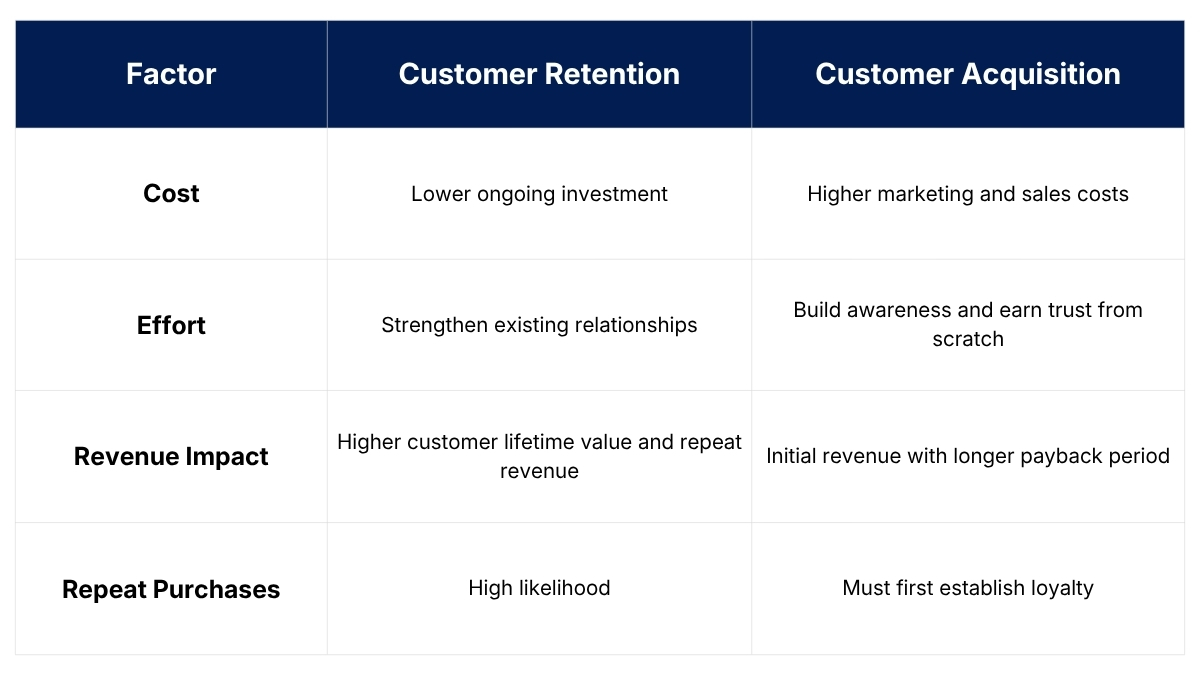
Both strategies are essential, but the advantage of customer retention lies in maximizing the value of customers you've already earned.
Examples of How Brands Drive Customer Loyalty
Tiered Rewards
Airlines, hotels, and retailers use tiered loyalty programs that unlock increasingly valuable benefits as customers engage more frequently.
Referral Incentives
Many subscription businesses reward both existing customers and new customers with discounts or credits, encouraging organic growth through advocacy.
Personalized Offers
Retailers use customer purchase history to recommend products and deliver individualized promotions that increase relevance and repeat purchases.
Exclusive Member Experiences
Brands create VIP events, early product access, or exclusive content that strengthens emotional loyalty and makes members feel valued.
Customer Retention Benefits
Businesses that invest in retention experience benefits that extend far beyond repeat purchases.
- Higher customer lifetime value
- Increased profitability
- More referrals and positive reviews
- Greater resistance to competitors
- Better customer insights through ongoing engagement
- More predictable recurring revenue
These customer retention benefits make loyalty one of the highest-return investments available to growing businesses.
Mistakes That Erode Customer Loyalty
Even well-designed loyalty strategies can fail when businesses overlook the customer experience.
Inconsistent Customer Service
Poor service across different channels quickly damages trust and weakens long-term relationships.
Ignoring Customer Feedback
Customers expect businesses to listen and improve. Ignoring recurring issues signals that their opinions don't matter.
One-Size-Fits-All Rewards
Generic rewards often fail to motivate customers. Personalization creates significantly more meaningful engagement.
Poor Communication
Irrelevant emails, excessive promotions, or inconsistent messaging reduce customer engagement over time.
Complicated Loyalty Programs
If customers struggle to understand how to earn or redeem rewards, participation declines and perceived value drops.
Conclusion
Businesses that successfully drive customer loyalty create stronger customer relationships, improve retention, and generate sustainable long-term growth. By focusing on the key drivers of customer loyalty—including personalization, trust, meaningful rewards, and exceptional customer experiences—organizations can maximize customer lifetime value while reducing acquisition costs. Ready to build a loyalty strategy that delivers measurable business results? Contact the Fielo team to learn how their loyalty solutions can help your business grow. For a step-by-step walkthrough, see our guide on how to set up a loyalty program that works.
Frequently Asked Questions
What are the key drivers of customer loyalty?
The key drivers of customer loyalty include trust, personalized experiences, consistent value, excellent customer service, and meaningful rewards. Together, these factors encourage customers to return and build lasting relationships with your brand.
How does customer loyalty drive business growth?
Customer loyalty drives business growth by increasing repeat purchases, improving customer lifetime value, generating referrals, and lowering customer acquisition costs. Loyal customers also contribute to more predictable revenue and stronger brand advocacy.
How do you drive customer loyalty over the long term?
You drive customer loyalty by consistently delivering excellent experiences, personalizing customer interactions, rewarding engagement, listening to feedback, and continuously improving the customer journey. Long-term loyalty is built through ongoing trust rather than one-time promotions.
What are the main benefits of customer retention?
The main customer retention benefits include higher profitability, increased customer lifetime value, lower acquisition costs, stronger relationships, and more predictable revenue. Retained customers are also more likely to recommend your brand.
Why is retaining a customer cheaper than acquiring a new one?
Retaining customers is typically cheaper because existing customers already know and trust your brand. Businesses spend less on marketing and sales efforts while generating additional revenue through repeat purchases.
What is the advantage of customer retention over acquisition?
The primary advantage of customer retention is maximizing the value of existing customer relationships. Retention improves profitability, increases lifetime value, and creates more sustainable growth than relying solely on new customer acquisition.
How does emotional connection drive customer loyalty?
Emotional connection creates loyalty by helping customers identify with a brand's values, mission, and experiences. Customers who feel emotionally connected are more likely to stay loyal even when competitors offer similar products or lower prices.
Do loyalty programs actually drive repeat purchases?
Yes. Well-designed loyalty programs encourage repeat purchases by rewarding customers for ongoing engagement and providing meaningful incentives that reinforce long-term relationships rather than one-time transactions.
What is the difference between customer loyalty and customer retention?
Customer retention measures whether customers continue buying from a business, while customer loyalty reflects their emotional commitment and preference for the brand. Loyal customers remain even when alternatives are available.
How is customer loyalty measured?
Customer loyalty is commonly measured using repeat purchase rate, customer lifetime value, Net Promoter Score (NPS), retention rate, referral rate, and engagement with loyalty programs. Together, these metrics provide a comprehensive picture of long-term customer relationships.