Building an emotional connection with customers is one of the most powerful ways to create lasting loyalty. While discounts and rewards may encourage repeat purchases, emotional loyalty is what keeps customers returning, advocating for your brand, and choosing you over competitors—even when alternatives are available.
An emotional connection in customer loyalty is the feeling of trust, belonging, and shared values that customers develop with a brand over time. Rather than returning simply because of convenience or price, emotionally loyal customers continue buying because they genuinely identify with the brand and the experiences it provides.
Unlike transactional relationships, emotional loyalty creates stronger, longer-lasting customer relationships that are more resilient to competitive offers.
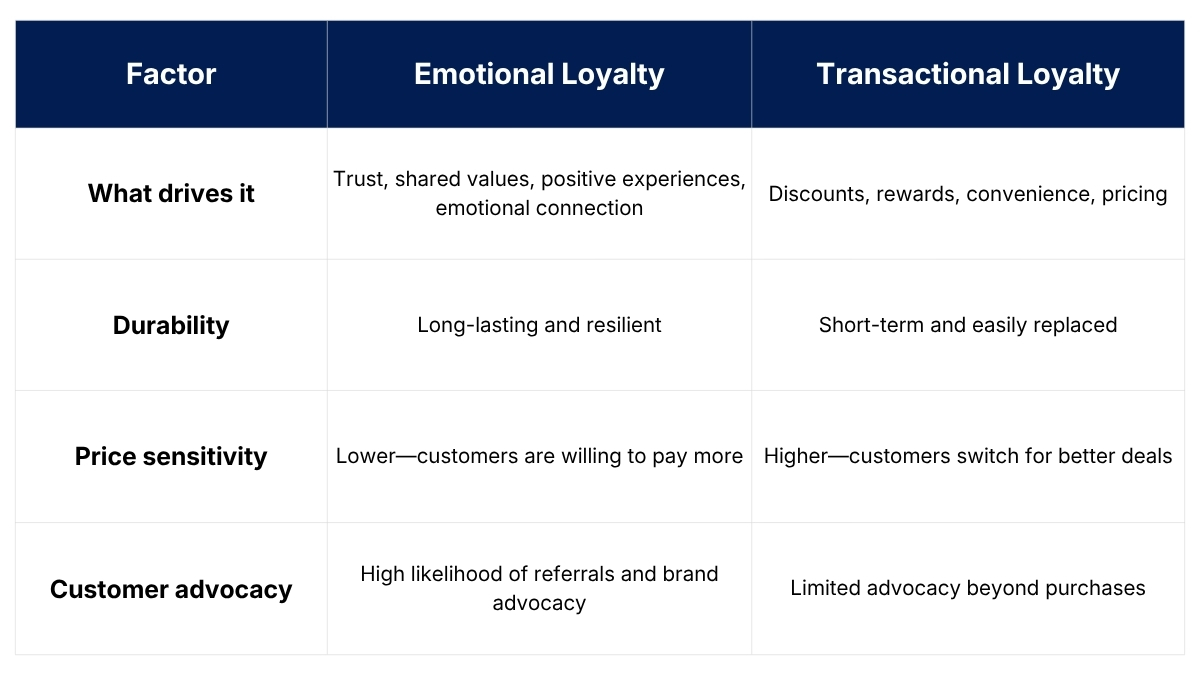
While transactional incentives can encourage repeat purchases, emotional loyalty builds relationships that continue long after promotional offers end.
Brands that create emotional connections enjoy stronger customer relationships and more sustainable business growth.
Emotionally connected customers are more likely to remain loyal over time because their relationship extends beyond products or pricing. Trust and positive experiences encourage them to continue choosing the same brand, increasing retention and customer lifetime value.
Customers who feel emotionally connected often purchase more frequently, explore additional products or services, and remain engaged for longer periods. As trust grows, so does their willingness to invest in the brand.
Satisfied customers naturally share positive experiences with friends, family, and colleagues. These authentic recommendations - known as customer advocacy - help attract new customers while reinforcing the credibility of your brand.
Creating emotional loyalty requires consistent, customer-focused experiences that make people feel recognized, valued, and understood.
Personalization is one of the strongest drivers of emotional loyalty.
Using customer preferences, purchase history, and behavioral insights allows brands to deliver relevant recommendations, individualized rewards, and communications that make every interaction feel meaningful. When customers feel understood, they're more likely to develop lasting emotional connections.
Consistency builds familiarity and trust.
Customers should experience the same brand personality, quality of service, and messaging across every touchpoint—from websites and mobile apps to customer service and loyalty programs. Consistent experiences reinforce reliability and strengthen emotional loyalty over time.
Customers connect with brands that genuinely care about their needs.
Listening to customer feedback, communicating transparently, resolving issues with empathy, and standing behind company values all contribute to stronger emotional relationships. Authenticity creates trust, and trust is the foundation of emotional loyalty.
Apple builds emotional loyalty through intuitive product experiences, premium design, and a strong brand identity that makes customers feel part of an exclusive ecosystem.
Nike creates emotional loyalty by inspiring customers through purpose-driven storytelling, athlete partnerships, and campaigns centered on perseverance, achievement, and personal growth.
Starbucks combines personalized rewards, mobile convenience, and community-focused experiences that make customers feel recognized and appreciated beyond each purchase.
Patagonia earns emotional loyalty by consistently demonstrating environmental responsibility and encouraging customers to support sustainability, creating a deep connection with shared values.
When businesses successfully build emotional loyalty, they create value that extends well beyond repeat purchases.
Key benefits include:
These benefits make emotional loyalty one of the most valuable competitive advantages a business can develop.
Emotional loyalty is built by creating meaningful customer experiences rooted in trust, personalization, consistency, and authenticity. Brands that invest in emotional connections strengthen customer retention, increase lifetime value, and inspire long-term advocacy. Ready to build deeper customer relationships? Contact the Fielo team to learn how our loyalty solutions help brands create lasting emotional loyalty.
Emotional loyalty is a customer's lasting emotional attachment to a brand based on trust, positive experiences, and shared values. It goes beyond repeat purchases by creating relationships that encourage long-term commitment and advocacy.
Emotional loyalty is driven by trust, connection, and shared values, while transactional loyalty is driven primarily by discounts, rewards, or convenience. Emotional loyalty tends to be more durable and less influenced by competitors' pricing.
You build emotional loyalty by consistently delivering personalized experiences, maintaining authentic communication, showing empathy, and providing exceptional customer experiences. Strong emotional connections develop over time through repeated positive interactions.
Apple is a well-known example of emotional loyalty. Many customers continue purchasing Apple products because they trust the brand, enjoy the user experience, and identify with its values and ecosystem rather than simply comparing prices.
An emotional loyalty program encourages lasting relationships by rewarding meaningful engagement rather than only purchases. These programs often include personalized experiences, exclusive access, community participation, and recognition that helps customers feel valued.
Emotional connection creates stronger customer relationships that extend beyond individual transactions. Customers who feel emotionally connected are more likely to stay loyal, recommend the brand, and continue purchasing over time.
Emotional loyalty increases both retention and customer spending. Customers who trust and identify with a brand are more likely to make repeat purchases, explore additional products, and remain loyal for longer periods.
Brand storytelling helps customers connect with a company's mission, values, and purpose. Authentic stories create emotional resonance that strengthens trust and builds deeper customer relationships.
Emotional loyalty can be measured using customer retention rates, Net Promoter Score (NPS), customer lifetime value, repeat purchase behavior, referral rates, customer satisfaction surveys, and qualitative customer feedback. Together, these metrics provide insight into the strength of customer relationships.
Yes. Emotionally loyal customers are generally less price-sensitive because they value the overall relationship and experience with the brand. While price remains important, trust and emotional connection often outweigh short-term financial incentives.

.png)