.png)

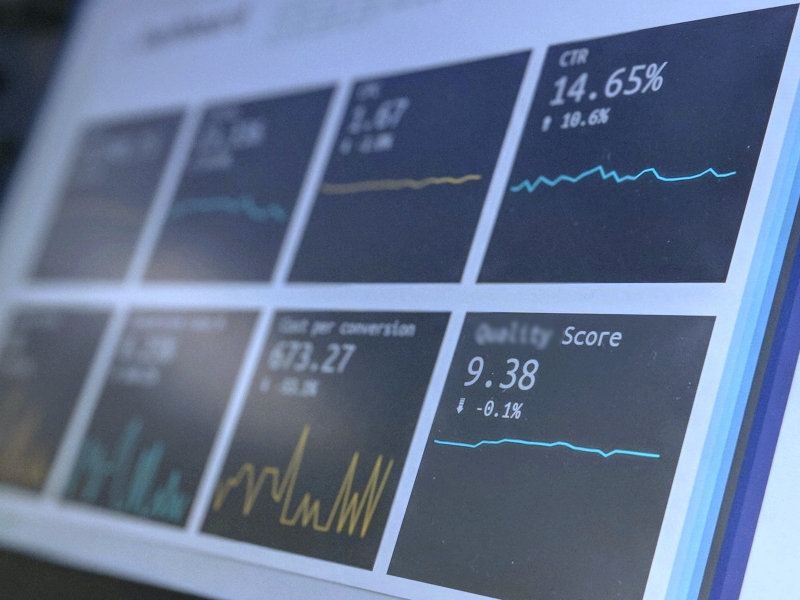
To consistently hit revenue goals, organizations must track the incremental steps that lead to a closed sale, rather than just top-level income. Relying on spreadsheets creates data silos and scales poorly.
By monitoring specific, actionable metrics and incentivizing the right daily behaviors through an integrated enablement platform, companies can trace exactly which actions produce revenue and transform average sellers into top performers.
In today’s highly competitive B2B and B2C markets, guessing what drives your revenue is a recipe for failure. To build a predictable and scalable revenue engine, organizations must track the right sales performance metrics. Whether you are managing an internal corporate team or a diverse network of channel partners, understanding these data points is absolutely crucial. In this guide, you will learn what these metrics are, why they matter, the difference between general metrics and KPIs, the specific indicators you need to track (including retail sales performance metrics), and the best practices to evaluate and improve your overall sales output.
What Are Sales Performance Metrics?
Sales performance metrics are specific data points used to measure the efficiency, activity, and overall effectiveness of an individual sales representative, a sales team, or a company's broader sales strategy. They provide a clear, quantifiable window into how well your team is executing the sales process at every stage of the funnel. Rather than simply looking at the total money earned at the end of the quarter, these metrics track the incremental steps—such as calls made, deals registered, and training modules completed—that ultimately lead to a closed sale.
Why Sales Performance Metrics Matter
Sales organizations are under growing pressure to do more with fewer resources. Quota expectations increase every year, buyer journeys grow more complex, and the margin for error narrows. Tracking these metrics matters because it connects daily sales enablement activities to tangible revenue outcomes.
Strong sales performance indicators show leaders exactly where activity converts to pipeline and where it stalls. Industry statistics highlight the growing urgency of data-driven performance management:
- The global sales enablement market is projected to reach US$12.78 billion by 2030, according to a Grand View Research report.
- A 2024 State of Sales Enablement report by Seismic found that 89% of teams using an integrated enablement platform to track and motivate behavior say it gives them a competitive advantage.
- Conversely, trying to manage performance via legacy solutions like spreadsheets yields a dismal 20% to 37% utilization rate, largely due to immense manual effort and a high rate of errors.
Sales Performance Metrics vs KPIs
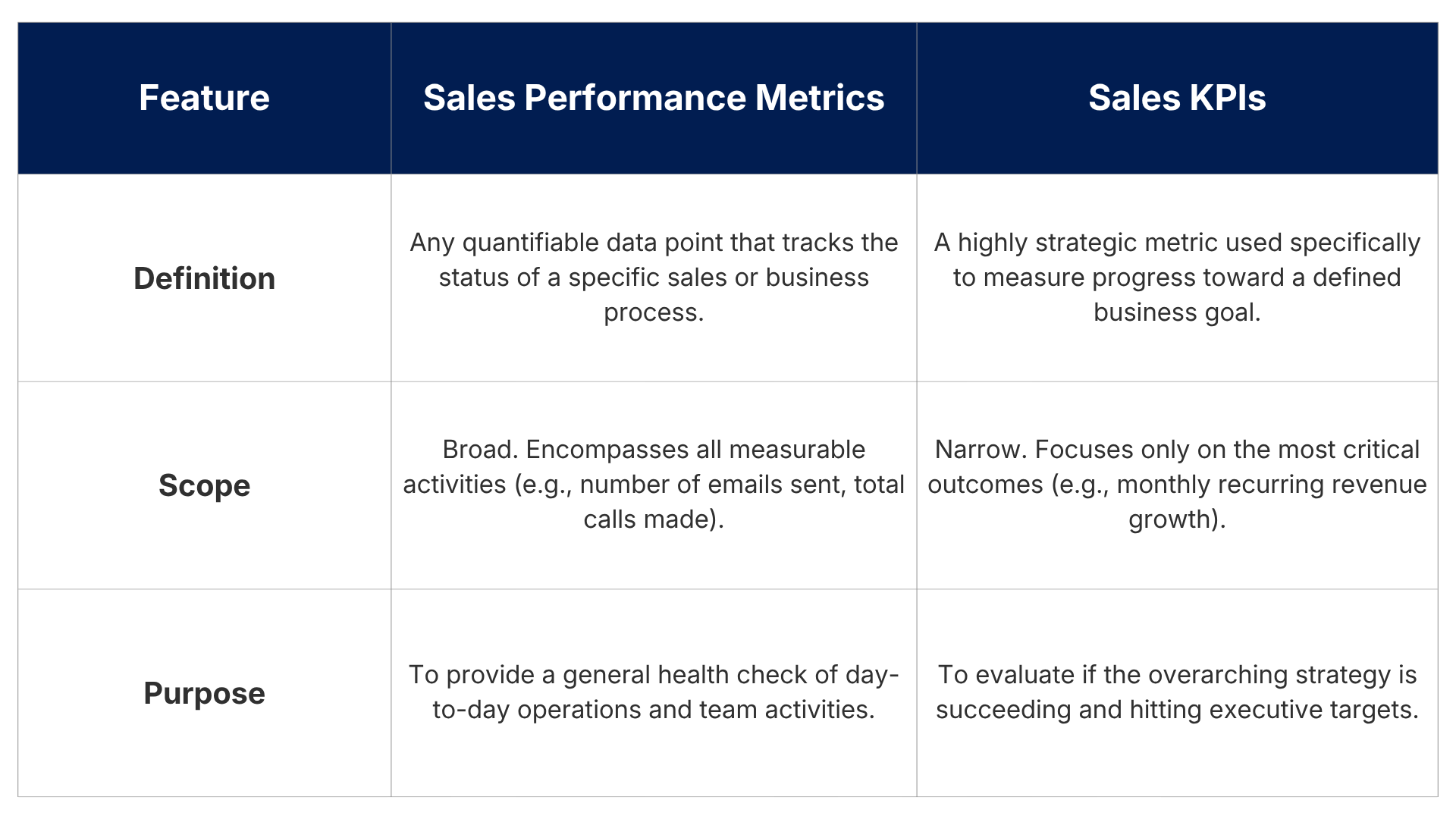
While often used interchangeably, metrics and KPIs (Key Performance Indicators) serve slightly different functions in evaluating sales performance.
Common sales KPI examples include win rate, pipeline velocity, and average deal size, while broader metrics might cover activity counts or engagement rates.
Key Sales Performance Metrics to Track
To gain a clear picture of your team's success, you must measure the behaviors that lead to revenue. The most useful sales metrics to track are the ones that trace directly from activity to closed deals.
- Win Rate: The percentage of total opportunities or leads that successfully convert into paying customers. Why it matters: Tracking win rates allows enablement leaders to trace the direct impact of specific training programs on a rep's ability to successfully close a deal.
- Pipeline Velocity: The speed at which a qualified lead moves through your sales pipeline to become a closed deal. Why it matters: Moving beyond basic course satisfaction scores to tracking pipeline velocity shows you exactly how quickly your sales cycle is moving and where prospects are getting stuck.
- Closed Deals Ratio: The average number of successfully closed deals per sales representative. Why it matters: It provides better sales performance visibility, helping managers identify top performers and reps who need additional coaching.
- Average Deal Size: The average revenue generated per closed sale. Why it matters: It helps evaluate if reps are successfully up-selling or cross-selling, demonstrating how product knowledge correlates with larger basket sizes.
- Lead Conversion Rate: The percentage of generated leads that move to the next stage of the funnel. Why it matters: It indicates the quality of the leads being worked and the effectiveness of the initial sales pitch.
How to Evaluate Sales Performance
Evaluating sales performance requires moving away from tracking isolated events and instead connecting behaviors directly to pipeline metrics. One persistent challenge in sales management is attribution—measuring training completion rates without asking whether the investment generated more revenue than it cost.
When your training, incentives, and CRM data share the same architecture, evaluation becomes accurate. It becomes possible to compare the win rates of reps who completed specific enablement programs against those who did not, and track how their training correlates with their average deal size. Real-time analytics allow you to trace the impact of specific actions on onboarding speed and quota attainment.
Retail Sales Performance Metrics
In the B2B and B2C retail sectors, evaluating performance requires monitoring slightly different transactional indicators. Key retail sales performance metrics include:
- Average Daily Items Sold: A vital indicator of daily volume and retail health. For example, a B2B retail incentive program for Dunlop resulted in a 25% increase in average daily items sold while maintaining constant daily transactions.
- Point of Sales (POS) Engagement: Tracking how actively retail sales reps and cashiers interact with enablement platforms, training modules, and promotions on the store floor.
- Average Revenue Growth per Merchant: Essential for tracking the financial health, sales performance, and expansion of individual retail partners or franchise locations.
Common Mistakes in Measuring Sales Performance
- Relying on Spreadsheets: Managing performance and incentives via manual spreadsheets is highly error-prone and fundamentally unscalable. Spreadsheets isolate data because they cannot integrate dynamically with CRMs, HR, or payroll systems.
- Measuring Completion Instead of Impact: Organizations often mistakenly use training completion or course satisfaction scores as their primary metric, which fails to answer whether the activity actually drove revenue or improved pipeline velocity.
- Decoupling Incentives from Learning: Waiting for a closed deal to trigger a reward only benefits those who already know how to perform. This ignores the vital behaviors—like learning and product certification—that help struggling reps develop.
- Overfocusing on sales productivity metrics: Tracking calls made, emails sent, or meetings booked in isolation tells only half the story. Productivity numbers need to be paired with outcome metrics like win rate to matter.
Best Practices for Improving Sales Performance
- Incentivize Behaviors, Not Just Results: The integration of learning and incentives flips the dynamic of traditional sales management. Award points, badges, or recognition automatically when a rep completes a certification or scores highly on a product knowledge quiz, creating a continuous feedback loop.
- Implement Gamification: Use leaderboards, challenges, and missions to create healthy, sustained competition across both learning and daily sales activities.
- Deploy an Integrated Engine: Shift from isolated tools to a unified platform. Connecting your CRM, learning management system, and incentives allows you to trace exactly which behaviors produce revenue, giving you a massive competitive edge.
Conclusion
Tracking the right sales performance metrics is essential for converting isolated sales efforts into a predictable, scalable revenue engine. Businesses must focus their measurement on true revenue impact—such as win rates and pipeline velocity—rather than just vanity metrics like training completion. Relying on spreadsheets for performance evaluation creates dangerous data silos, requires immense manual effort, and is fundamentally unscalable.
Instead, evaluating sales performance is vastly more effective when your learning tools, gamification, and incentives are unified within a single architecture. If you are looking to unlock revenue growth through smart account planning and execution, Fielo's Sales Performance suite integrates seamlessly into your Salesforce org to track and incentivize the exact behaviors that matter most.
Frequently Asked Questions
What are sales performance metrics?
They are quantifiable data points used to track and evaluate the efficiency, behaviors, and overall success of a sales team or individual representative throughout the sales cycle.
What is the difference between sales metrics and KPIs?
Sales metrics track the status of all broad, day-to-day business processes, whereas KPIs (Key Performance Indicators) are a specific, narrow subset of metrics used to measure progress against strategic, high-level business goals.
How do you evaluate sales performance?
You evaluate it by moving beyond isolated activity tracking and connecting daily behaviors (like training completion or deal registration) directly to CRM revenue metrics, such as win rates and average deal size.
What are the most important sales performance metrics to track?
The most critical metrics include win rates, pipeline velocity, average deal size, lead conversion rates, and the closed deals ratio per sales representative.
What are retail sales performance metrics?
These are specific indicators used in retail environments, such as average daily items sold, point-of-sale (POS) engagement, and average revenue growth per merchant.
How often should sales performance be measured?
Performance should be monitored continuously using real-time analytics dashboards, allowing managers to conduct weekly or monthly reviews to proactively adjust strategies and prevent missed quotas.
What tools help measure sales performance?
Integrated sales enablement platforms and CRM-native solutions (like Fielo) are the best tools, as they automatically connect training, incentives, and pipeline data without the errors associated with manual spreadsheets.
How do you improve sales performance using metrics?
By using metrics to identify bottlenecks, you can deploy targeted gamification and behavioral incentives. Rewarding reps for completing product certifications or hitting specific pipeline milestones ensures continuous development and increased revenue