.png)

Key Takeaways
Here is a summary of how to measure and improve sales performance using data-driven strategies, structured incentives, and the right tools.
- Sales performance goes beyond closed deals. It encompasses activity metrics, pipeline health, conversion rates, and customer retention, reflecting the full arc of the sales process from prospecting to close.
- Measuring sales performance is the foundation of improvement. Without structured tracking, managers react to problems rather than preventing them. Consistent measurement creates a shared language between leadership and reps.
- Five metric categories give a complete picture. Revenue metrics, pipeline metrics, activity metrics, conversion metrics, and retention metrics together reveal team and individual output at every stage.
- Trend analysis separates noise from real signals. A single bad month is noise, but a three-month slide in win rates is structural. Correlating leading and lagging indicators helps managers course-correct in real time.
- Clear goals and coaching are proven ways to improve sales performance. Breaking revenue targets into specific goals by rep and territory, combined with weekly coaching rhythms, produces measurable results.
- Behavior-based incentives improve sales team performance beyond commission-only plans. Structured programs using points, rebates, SPIFFs, and tiered rewards redirect energy toward pipeline-building activities. Fielo helps organizations automate these programs at scale.
- Channel partner enablement directly impacts revenue. Providing partners with sales tools, training, and incentive structures keeps them engaged. Strategies to improve sales performance must include partner-facing programs to drive results across the entire network.
- The right tech stack creates a closed loop between measurement and rewards. CRM platforms, sales analytics, incentive management solutions like Fielo, and learning management systems together create the foundation for consistent, data-driven improvement.
- Improving sales performance is a continuous discipline. Organizations that treat performance management as an ongoing system, not periodic reviews, sustain revenue growth over time.
Sales performance is the heartbeat of your revenue engine. When it's strong, growth compounds. When it falters, every other business function feels the strain. Yet many organizations still rely on gut instinct rather than data to manage their teams — leaving significant revenue on the table.
This mini-guide walks you through how to measure sales performance accurately, interpret what the data is telling you, and apply proven strategies to improve sales team performance at every level of your organization.
What Is Sales Performance?
Sales performance refers to how effectively a sales team or individual meets defined revenue targets and business objectives. It encompasses more than just closed deals — it includes activity metrics, pipeline health, conversion rates, and customer retention.
True sales performance reflects the full arc of the sales process: how well reps prospect, engage, qualify, and close, and how efficiently the team as a whole turns effort into revenue.
Why Measuring Sales Performance Matters
You can't improve what you don't measure. Without a structured approach to measuring sales performance, managers are left reacting to problems rather than preventing them.
Consistent measurement enables you to:
- Identify top and bottom performers before small gaps become large ones
- Forecast revenue with greater accuracy
- Pinpoint bottlenecks in the sales funnel
- Allocate resources — coaching, tools, incentives — where they'll have the highest impact
- Set realistic targets grounded in historical data
Organizations that implement structured performance tracking consistently outperform those that don't. The data creates a shared language between leadership and reps, turning subjective conversations about "effort" into objective discussions about outcomes.
Key Metrics for Measuring Sales Performance
Selecting the right KPIs is essential. Here are the metrics that matter most:
Revenue Metrics
- Total revenue vs. quota attainment
- Average deal size
- Revenue by product, segment, or territory
Pipeline Metrics
- Number of qualified opportunities
- Pipeline coverage ratio (pipeline value vs. quota)
- Deal velocity (how fast opportunities move through stages)
Activity Metrics
- Number of calls, emails, and meetings per rep
- Lead response time
- Follow-up frequency
Conversion Metrics
- Lead-to-opportunity conversion rate
- Opportunity-to-close rate (win rate)
- Sales cycle length
Retention Metrics
- Customer churn rate
- Net Revenue Retention (NRR)
- Expansion revenue
For teams operating through channel partners, additional KPIs apply — including partner participation rates, deal registration activity, and sales volume by partner tier.
How to Analyze Sales Performance Data
Collecting data is only the first step. Turning it into insight requires a structured analysis approach:
- Establish baselines. Understand what "normal" looks like before chasing anomalies. Compare performance against historical trends, peer benchmarks, and stated targets.
- Segment your analysis. Break data down by rep, team, region, product line, and customer segment. Aggregate numbers often hide individual variance that points to fixable problems.
- Look for patterns over time. A single bad month is noise. A three-month slide in win rates is a signal. Trend analysis separates temporary dips from structural issues.
- Correlate leading and lagging indicators. Lagging indicators (like closed revenue) tell you what happened. Leading indicators (like pipeline coverage and activity volume) tell you what's about to happen. Managing both gives you the ability to course-correct in real time.
- Connect qualitative context. Numbers alone don't explain why performance is where it is. Sales call recordings, rep feedback, and CRM notes add the human layer that turns data into actionable decisions.
Strategies to Improve Sales Performance
Once you've measured and analyzed performance, here are proven ways to improve sales performance and move the needle:
Set clear, individual goals. Vague targets produce vague effort. Break company revenue targets down into specific, measurable goals by rep, territory, and time period.
Invest in ongoing coaching. One-off training doesn't stick. High-performing sales organizations embed coaching into weekly rhythms — reviewing calls, role-playing objections, and reinforcing winning behaviors consistently.
Fix CRM adoption. CRM data is only valuable if it's accurate. When reps misuse or underuse CRM tools, forecasting breaks down and coaching becomes guesswork. Establishing clean data hygiene habits is foundational to every other improvement effort.
Align incentives with the right behaviors. Compensation plans that reward only closed revenue can push reps toward short-term thinking. Structured incentive programs — including points, rebates, SPIFFs, and tiered rewards — can redirect energy toward behaviors that build long-term pipeline health. Platforms like Fielo help organizations design and automate behavior-based incentive programs, enabling teams to reward not just outcomes but the sales activities that drive them: deal registrations, training completions, referral generation, and more.
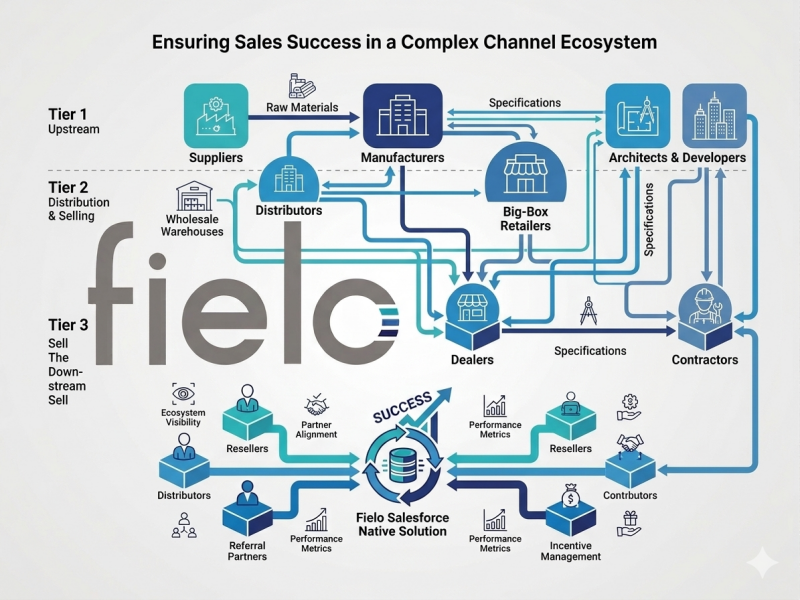
Invest in enablement for channel partners. If your revenue runs through resellers or channel partners, their performance is your performance. Providing partners with the right sales tools, training, and incentive structures directly impacts your top line. Fielo's channel enablement platform supports this with customizable incentives, analytics, and partner portals that keep partners engaged and focused on your brand.
Recognize and replicate top performers. Study what your highest performers do differently and systematize it. Whether it's a particular outreach cadence, discovery question framework, or objection-handling technique — codify it and train the rest of the team on it.
Tools to Measure Sales Performance
The right tools make measurement scalable and consistent:
- CRM platforms: Centralize pipeline data, activity tracking, and forecasting
- Sales analytics tools: Surface conversation intelligence and deal risk signals
- Incentive management platforms: Track and reward rep and partner performance automatically — Fielo integrates natively with Salesforce to provide real-time dashboards, automated reward fulfillment, and deep analytics on partner behavior and program ROI
- Learning management systems (LMS): Measure training completion and correlate it with sales outcomes
The most effective tech stacks combine CRM data with incentive automation and analytics to enhance sales performance, creating a closed loop between measurement and the behaviors teams are rewarded for.
Conclusion
Improving sales performance isn't a one-time initiative — it's an ongoing discipline built on clear measurement, honest analysis, and consistent reinforcement of winning behaviors. Organizations that treat performance management as a system — rather than a set of periodic reviews — are the ones that sustain revenue growth over time.
Whether you're managing an internal sales team or a network of channel partners, the principles are the same: measure the right things, diagnose the root causes of underperformance, and align your incentives with the behaviors that drive results.
Apply these principles consistently to increase sales performance across every level of your organization.
Frequently Asked Questions
How do you measure sales performance?
Measure sales performance by tracking a combination of revenue metrics (quota attainment, deal size), pipeline metrics (coverage, velocity), activity metrics (calls, meetings), and conversion rates (lead-to-close, win rate). The key is to monitor both leading indicators — which predict future results — and lagging indicators, which confirm what has already happened.
How can you improve sales team performance?
Improving sales team performance requires a combination of clear goal-setting, regular coaching, better sales tools, and incentive structures that reward the right behaviors. Addressing CRM adoption, reducing administrative burden, and recognizing top performers consistently also make a measurable difference.
How do you increase sales performance quickly?
To increase sales performance quickly, focus on your existing pipeline first: identify stalled deals, re-engage warm leads, and optimize your highest-converting stages. Short-term SPIFFs and targeted incentives can also accelerate activity levels in a defined timeframe without requiring structural changes.
What tools help enhance sales performance?
The most impactful tools include CRM platforms for data centralization, sales engagement tools for activity tracking, conversation intelligence platforms for coaching, and incentive management solutions like Fielo for motivating and rewarding rep and partner behavior at scale.
How often should sales performance be reviewed?
Sales performance should be reviewed at multiple cadences: daily for activity metrics, weekly for pipeline health, monthly for quota progress, and quarterly for strategic alignment. Each review cadence serves a different purpose — daily reviews catch execution gaps, while quarterly reviews inform compensation and territory planning.
What causes poor sales performance?
Poor sales performance typically stems from unclear targets, insufficient coaching, misaligned incentives, weak pipeline management, or inadequate product knowledge. In channel environments, poor partner enablement — including lack of training, sales tools, or compelling rewards — is a major contributor.
How can incentives improve sales performance?
Well-designed incentives connect individual effort to meaningful rewards, making the desired behaviors more attractive. Beyond commission, structured programs using points, rebates, tiered status, and experiential rewards can motivate a wider range of behaviors — including training participation, deal registration, and partner referrals — that compound into stronger long-term performance.
What is a sales performance improvement plan?
A sales performance improvement plan (PIP) is a structured, time-bound document that outlines specific performance gaps for an individual rep, defines measurable targets for improvement, and establishes a timeline and support plan. When used constructively, PIPs can be a genuine development tool — not just a precursor to termination.