.png)

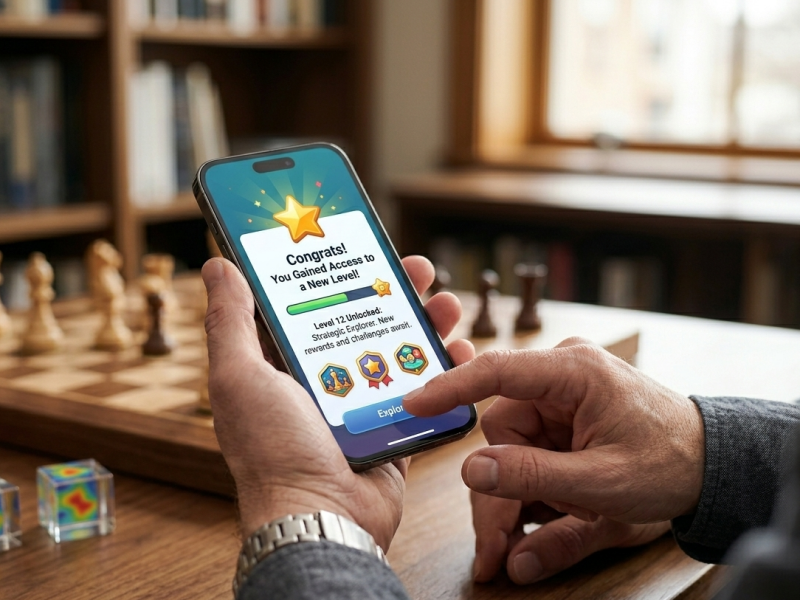
Gamification is the practice of applying game design elements, such as points, levels, challenges, and rewards, to non-game contexts like shopping, apps, and loyalty programs to motivate specific customer behaviors. Done well, gamification loyalty programs turn routine interactions, such as a purchase, a referral, or a review, into small moments of achievement that make customers want to return.
This isn't about adding a badge to your checkout page. Below, we break down how gamification works, the psychology behind it, nine core techniques with brand examples, and how to build a loyalty gamification strategy without falling into common traps.
How Gamification Works
Gamification borrows triggers that games have used for decades: clear goals, immediate feedback, a sense of progress, and rewards that feel earned. When a customer sees a progress bar fill up or a badge unlock, they register a small win, which keeps them engaged longer than a plain transaction would.
The business case is strong because loyalty is fragile. In PwC's Customer Loyalty Survey of more than 4,000 US consumers, over a quarter said they had stopped buying from a business in the past year. Gamification gives customers a reason to stay: industry research cited by Optimove suggests gamification can increase loyalty program retention by up to 30% when it is designed around clear goals.
This is also why gamification tends to outperform one-off discounts. A discount is a single transaction; gamification builds a habit loop, where the customer's next action is already anticipated and rewarded. That loop separates a short-term bump from durable loyalty.
Learn more about our S-Grit gamification and behavioral performance models.
The Psychology Behind Gamification
Gamification works because it maps to basic human needs. In Maslow's Hierarchy of Needs, the higher levels are belonging, esteem, and self-actualization, and gamification addresses all three:
- Belonging: Communities, team challenges, and shared leaderboards make members feel part of a group.
- Esteem: Badges, tiers, and status recognize achievement in front of others.
- Self-actualization: Progress toward personal goals, such as a streak or a mastery level, gives a sense of growth.
Three behavioral drivers amplify the effect:
- Reward-seeking: Earning a reward, especially an unpredictable one, reinforces the behavior that led to it.
- Competitive instinct: Comparing progress with others motivates people to do a little more.
- FOMO: Time-limited challenges and expiring rewards create urgency to act now.
Gamification Techniques for Loyalty Programs
Here are nine core techniques businesses use to build customer engagement and loyalty:
1. Points and Rewards
Customers earn points for purchases, referrals, or surveys, then redeem them for discounts or perks.
- Brand example: Costa Club members collect Beans on drink purchases, with bonus Beans for using a reusable cup, and redeem them for free drinks.
- Why it works: It ties effort directly to a tangible payoff, and bonus points steer customers toward behaviors the brand values.
2. Progression Systems
Levels and tiers give customers a visible path forward, unlocking better rewards or status at each milestone.
- Brand example: Hilton Honors moves members from Member to Silver, Gold, and Diamond status, with richer benefits at each level.
- Why it works: Status taps into esteem, and the next tier gives members a reason to consolidate spending with one brand.
3. Challenges and Quests
Time-bound tasks, like five purchases in a month or completing a profile, add purpose to routine interactions.
- Brand example: The Bergzeit Club, from the German mountaineering retailer, uses challenges to encourage repeat purchases and engagement beyond the checkout.
- Why it works: Clear, achievable goals with a deadline create focus and urgency, and they can push customers toward specific categories.
4. Social Engagement and UGC Challenges
Leaderboards, competitions, and communities add a competitive or collaborative layer. User-generated content (UGC) challenges go further: hashtag contests, photo or video uploads, and outfit-of-the-day posts.
- Brand example: Luxury jewelry brand Noémie rewards customers with loyalty points for reviews that include photos or videos, and members can redeem those points for cash. Loyalty members now account for 57% of all its orders.
- Why it works: Members get recognition and rewards, and the brand gets authentic social proof at a low cost, without running discounts.
5. Personalization and Customization
Using customer data to tailor rewards, milestones, and recommendations shows customers the program understands them, which deepens the emotional connection to the brand.
- Brand example: Spotify Wrapped turns each listener's data into a personal, shareable year in review.
- Why it works: Personal relevance keeps engagement high, and shareable results spread the brand organically.
6. Surprise and Delight
Unexpected bonus points, hidden rewards, or random perks break the predictability of standard programs.
- Brand example: Sephora Beauty Insider members receive a birthday gift every year.
- Why it works: Unexpected rewards create memorable moments and positive emotions that outlast a standard discount.
7. Feedback and Progress Tracking
Progress bars, achievement notifications, and dashboards show customers where they stand.
- Brand example: The Starbucks Rewards app shows members how many Stars they have and how close they are to their next reward.
- Why it works: When the next milestone is visible and within reach, customers are motivated to complete it.
8. Gamified Surveys and Quizzes
Visual quizzes, like/dislike image pickers, and preference surveys keep members active while collecting zero-party data that customers share willingly.
- Brand example: Victoria's Secret PINK Nation used daily trivia and polls to gather customer preferences while keeping members engaged.
- Why it works: Members enjoy the interaction, and brands gain preference data for personalization without relying on third-party tracking.
9. Prize Draws and Spin-to-Win
Luck-based mechanics, such as prize wheels, scratch cards, and random draws, add excitement and unpredictability beyond standard points.
- Brand example: KFC Rewards Arcade invites UK customers to play an arcade-style mini-game after qualifying purchases, with a chance to win free menu items.
- Why it works: Uncertain rewards are more exciting than predictable ones, and every customer has a chance to win, not just the heaviest buyers.
Gamification Examples in Loyalty Programs
Well-known gamification examples show these techniques at scale. Starbucks Rewards uses Stars and progress tracking, Duolingo uses streaks and leaderboards, Nike Run Club uses challenges and badges, and Sephora Beauty Insider combines tiers with personalization. These two loyalty-native programs show the measurable results:
KFC Rewards Arcade
- Challenge: KFC UK's previous stamp-based Colonel's Club was used by fewer than 25% of customers.
- Gamification approach: KFC replaced it with an arcade-style rewards program built on generosity and surprise, giving every customer a chance to win free food after a qualifying purchase.
- Results: The program delivered 1.3 million reward redemptions, a 22% increase in app transactions, and a 3% increase in average customer frequency.
Yeo Valley Organic Yeokens
- Challenge: As a dairy brand selling through supermarkets, Yeo Valley had limited direct relationships with its customers.
- Gamification approach: Shoppers collect Yeokens by purchasing Yeo Valley products, and the program combines three distinct types of gamification, each aimed at a different motivation and member segment.
- Results: Yeokens has become the brand's main owned channel for first-party data, product launches, and customer insight, and it won Customer Loyalty Programme of the Year at the Retail Systems Awards 2025.
Across every example, the technique matches what the brand's customers respond to, not what's trendy.
Benefits of Gamification for Loyalty Programs
- Reduced churn: Ongoing goals and rewards give members reasons to keep coming back.
- Better data collection: Quizzes, surveys, and challenges capture zero-party preference data.
- Word-of-mouth and referral growth: Shareable achievements and referral challenges bring in new customers.
- Community building: Social and UGC challenges connect members with each other, not just with the brand.
- Increased brand recall: Fun, memorable interactions keep the brand top of mind between purchases.
How to Build a Loyalty Gamification Strategy
Effective gamification in marketing starts with the goal, not the mechanic:
- Set your goal first. Decide whether you're focused on retention, acquisition, or data collection. Each calls for different mechanics.
- Pick one target behavior. Choose a single action you want more of, such as repeat purchases, referrals, or reviews.
- Match the technique to the goal. Use progression for retention, challenges and prize draws for short-term spikes, referral challenges for acquisition, and quizzes for data collection.
- Keep gamification rewards proportional. The effort required should match the value of the reward.
- Pilot before scaling. Test with one segment, measure the engagement lift, and adjust before rolling out program-wide.
- Monitor feedback and iterate. Track participation data and member feedback, then refresh challenges and rewards based on what you learn.
Common Mistakes in Gamification
- Rewarding the wrong actions: Incentivizing volume over value encourages gaming the system rather than genuine loyalty.
- Over-complicating the mechanics: Too many rules, tiers, or point types confuse customers. Forrester research lists overly complicated loyalty programs among the reasons shoppers stop buying from a brand.
- Offering rewards with no real value: If the payoff feels trivial, customers disengage.
- Ignoring the data: Without tracking, you can't tell which techniques are working.
- Treating gamification as a one-time launch: Programs that aren't refreshed lose novelty and participation fades.
Conclusion
Gamification techniques give businesses a practical way to turn everyday interactions into engagement and loyalty. The most effective gamification loyalty programs are tied clearly to a business goal, grounded in customer psychology, and refined with real data over time. If you're ready to build a gamification strategy for your loyalty program, get in touch with Fielo.
Frequently Asked Questions
What is gamification?
Gamification is the use of game design elements — points, levels, challenges, and rewards — in non-game settings to motivate specific behaviors. Businesses apply it to loyalty programs, apps, and marketing to increase engagement and retention.
What are the main gamification techniques?
Points and rewards, progression systems, challenges, social and UGC engagement, personalization, surprise and delight, progress tracking, gamified surveys and quizzes, and prize draws.
What are examples of gamification in loyalty programs?
KFC Rewards Arcade, Yeo Valley Yeokens, Starbucks Rewards, Sephora Beauty Insider, and Costa Club are strong examples, each pairing a technique with a core customer behavior.
What are gamification methods?
Gamification methods refer to the broader frameworks used to structure a program, such as point-based systems, tiered progression, competitive leaderboards, or milestone-based challenges. The right method depends on the behavior a business wants to encourage.
How does gamification improve customer engagement?
Gamification improves customer engagement gamification by making routine actions feel rewarding through visible progress, achievement, and feedback. This keeps customers interacting more frequently than they would with a purely transactional experience.
How is gamification used in loyalty programs?
Loyalty gamification typically combines points, tiers, and milestone rewards to give customers a reason to stay active in a program over time. Progression systems, in particular, are effective because they create a visible path toward increasingly valuable rewards.
What is a gamification marketing strategy?
A gamification marketing strategy is a plan that uses game mechanics to drive a specific marketing outcome, such as more referrals, higher retention, or increased purchase frequency. It requires choosing mechanics deliberately, based on the target behavior, rather than adding them for novelty. Once you have chosen your technique, the next step is selecting the right gamification tools to implement it.
How do you start using gamification in your business?
Start by identifying one customer behavior you want to influence, then choose a single technique — like points or a simple challenge — that fits that goal. Pilot it with a segment of customers, measure the results, and expand based on what performs.
What are common gamification mistakes?
The most common mistakes are rewarding the wrong actions, over-complicating mechanics, offering low-value rewards, and failing to track performance data. Any of these can cause a program to lose engagement even if the initial concept was sound.
Does gamification actually increase retention?
Yes, when it's tied to clear goals and meaningful rewards, gamification measurably increases retention by giving customers ongoing reasons to return. Progression systems and personalized rewards tend to have the strongest impact on long-term retention specifically.
See Gamification Amplify Incentive Program Engagement - Fielo In Action