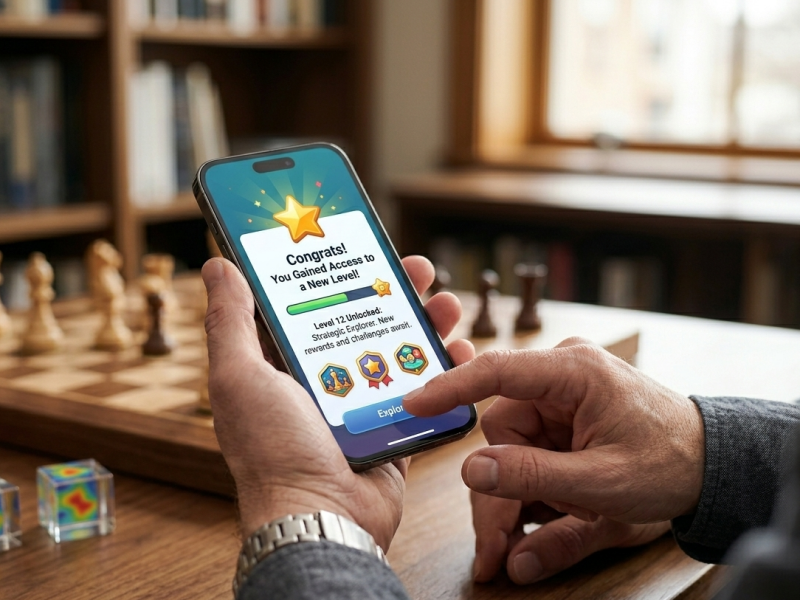
Gamification is the practice of applying game design elements — points, levels, challenges, rewards — to non-game contexts like shopping, loyalty programs, or apps, in order to motivate specific customer behaviors. Businesses use it because attention is hard to earn and even harder to keep. Done well, gamification techniques turn routine interactions — a purchase, a referral, a review — into small moments of achievement that make customers want to return.
This isn't about slapping a badge on your checkout page. The gamification techniques that actually work tap into intrinsic motivators like competition, achievement, and progress. Below, we break down how gamification works, the core techniques, real examples, and how to apply them without falling into common traps.
Gamification works because it borrows psychological triggers that games have used for decades: clear goals, immediate feedback, a sense of progress, and rewards that feel earned rather than given away. When a customer sees a progress bar fill up or a badge unlock, their brain registers small wins the same way it would in a game — which keeps them engaged longer than a plain transaction would.
For businesses, this translates into measurable behavior change. A well-designed gamification marketing strategy nudges customers toward specific actions — repeat purchases, referrals, reviews, app logins — by making those actions feel rewarding in the moment, not just useful in the long run. The mechanics matter less than the goal behind them: every technique should map to a business outcome, whether that's higher engagement, stronger loyalty, or more frequent purchases.
This is also why gamification tends to outperform generic discounting or one-off promotions. A discount is a single transaction; a well-structured gamification method builds a habit loop, where the customer's next action is already anticipated and rewarded before they even take it. That habit loop is what separates a short-term engagement bump from durable, long-term loyalty.
It's worth learning about our S-Grit gamification and behavioral performance models.
Here are the core gamification techniques businesses use to build customer engagement and loyalty:
Customers earn points for actions like purchases, referrals, or completing surveys, then redeem them for discounts or exclusive perks. It's the most familiar of all gamification methods because it directly ties effort to a tangible payoff, reinforcing the behaviors you want repeated.
Levels and tiers give customers a visible path forward. As they hit milestones, they unlock better rewards or status, which keeps them invested in the relationship rather than treating each purchase as a one-off transaction — a core driver of loyalty gamification.
Time-bound tasks — like completing five purchases in a month or finishing a set of onboarding steps — add a sense of purpose to routine interactions. Quests work especially well for pushing customers toward specific product categories or underused features.
Leaderboards, competitions, and community forums add a competitive or collaborative layer to customer engagement gamification. Letting customers compare progress with peers creates social proof and gentle pressure to stay active, which is harder to replicate with points alone.
Generic challenges lose relevance fast. Using customer data to tailor rewards, milestones, and recommendations to individual behavior shows customers the program understands them, which deepens the emotional connection to the brand.
Unexpected bonus points, hidden rewards, or random perks break the predictability of standard programs. These small surprises create memorable moments that keep customers checking in, even outside their normal purchase cycle.
Progress bars, achievement notifications, and personalized dashboards give customers a clear view of where they stand. This transparency is what turns a one-time reward into an ongoing motivator, since customers can always see the next milestone within reach.
Seeing these gamification techniques in action makes them easier to apply. A few recognizable examples:
Starbucks Rewards — Built around a tiered points system (Stars), Starbucks is a textbook case of progression systems in loyalty gamification, rewarding customers for every purchase with a clear path to free items and perks.
Duolingo — Known for streaks, XP points, and leaderboards, Duolingo leans heavily on social engagement and progress tracking to keep learners returning daily, even when the underlying task (studying) isn't inherently fun.
Nike Run Club — Uses challenges and quests (monthly mileage goals, badges for milestones) combined with social leaderboards, turning individual workouts into a shared, competitive experience among friends.
Sephora Beauty Insider — Combines a tiered rewards structure with personalization, offering birthday gifts and tailored product recommendations based on purchase history, an example of blending progression with customization.
Across all four, the pattern holds: the technique is chosen based on what the brand's customers actually respond to, not because it's trendy. That's the difference between gamification that sticks and gamification that fades after the initial novelty wears off.
A gamification marketing strategy works best when it's built around a clear goal, not just added for novelty:
Even a solid gamification methods toolkit can backfire if execution misses the mark:
Gamification techniques give businesses a practical way to turn everyday customer interactions into moments that build real engagement and loyalty. The techniques that work — points, progression, challenges, personalization — are the ones tied clearly to a business goal and refined with real customer data over time. If you're ready to build a gamification strategy suited to your loyalty program, get in touch with Fielo to see how it fits your business.
Gamification is the use of game design elements — points, levels, challenges, and rewards — in non-game settings to motivate specific behaviors. Businesses apply it to loyalty programs, apps, and marketing to increase engagement and retention.
The core techniques are points and rewards, progression systems, challenges and quests, social engagement, personalization, surprise and delight, and feedback or progress tracking. Each targets a different aspect of customer motivation, from short-term excitement to long-term loyalty.
Common gamification techniques examples include Starbucks' tiered Stars program, Duolingo's streaks and leaderboards, Nike Run Club's mileage challenges, and Sephora's Beauty Insider tiers. Each brand pairs a specific technique with its core customer behavior.
Gamification methods refer to the broader frameworks used to structure a program, such as point-based systems, tiered progression, competitive leaderboards, or milestone-based challenges. The right method depends on the behavior a business wants to encourage.
Gamification improves customer engagement gamification by making routine actions feel rewarding through visible progress, achievement, and feedback. This keeps customers interacting more frequently than they would with a purely transactional experience.
Loyalty gamification typically combines points, tiers, and milestone rewards to give customers a reason to stay active in a program over time. Progression systems, in particular, are effective because they create a visible path toward increasingly valuable rewards.
A gamification marketing strategy is a plan that uses game mechanics to drive a specific marketing outcome, such as more referrals, higher retention, or increased purchase frequency. It requires choosing mechanics deliberately, based on the target behavior, rather than adding them for novelty.
Start by identifying one customer behavior you want to influence, then choose a single technique — like points or a simple challenge — that fits that goal. Pilot it with a segment of customers, measure the results, and expand based on what performs.
The most common mistakes are rewarding the wrong actions, over-complicating mechanics, offering low-value rewards, and failing to track performance data. Any of these can cause a program to lose engagement even if the initial concept was sound.
Yes, when it's tied to clear goals and meaningful rewards, gamification measurably increases retention by giving customers ongoing reasons to return. Progression systems and personalized rewards tend to have the strongest impact on long-term retention specifically.
.png)