What is Channel Management? Types, Definition & Process
What is Channel Management? Types, Definition & Process
Key Takeaways
Channel managementis the strategic administration of external partnerships to effectively distribute products, expand market reach, and accelerate revenue. Here's what to remember from this guide:
It focuses on behavioral collaboration. Beyond just tracking transactions, it involves equipping third-party vendors with training, marketing assets, and incentives to ensure they prioritize your brand.
Different partners need different strategies. Channel management encompasses retail and wholesale distribution, Value-Added Reseller (VAR) programs, and independent contractor or agent networks.
The lifecycle requires structure. Building a successful partner ecosystem involves recruitment, continuous training via an LMS, marketing support via aDigital Asset Management (DAM)hub, and behavioral incentivization.
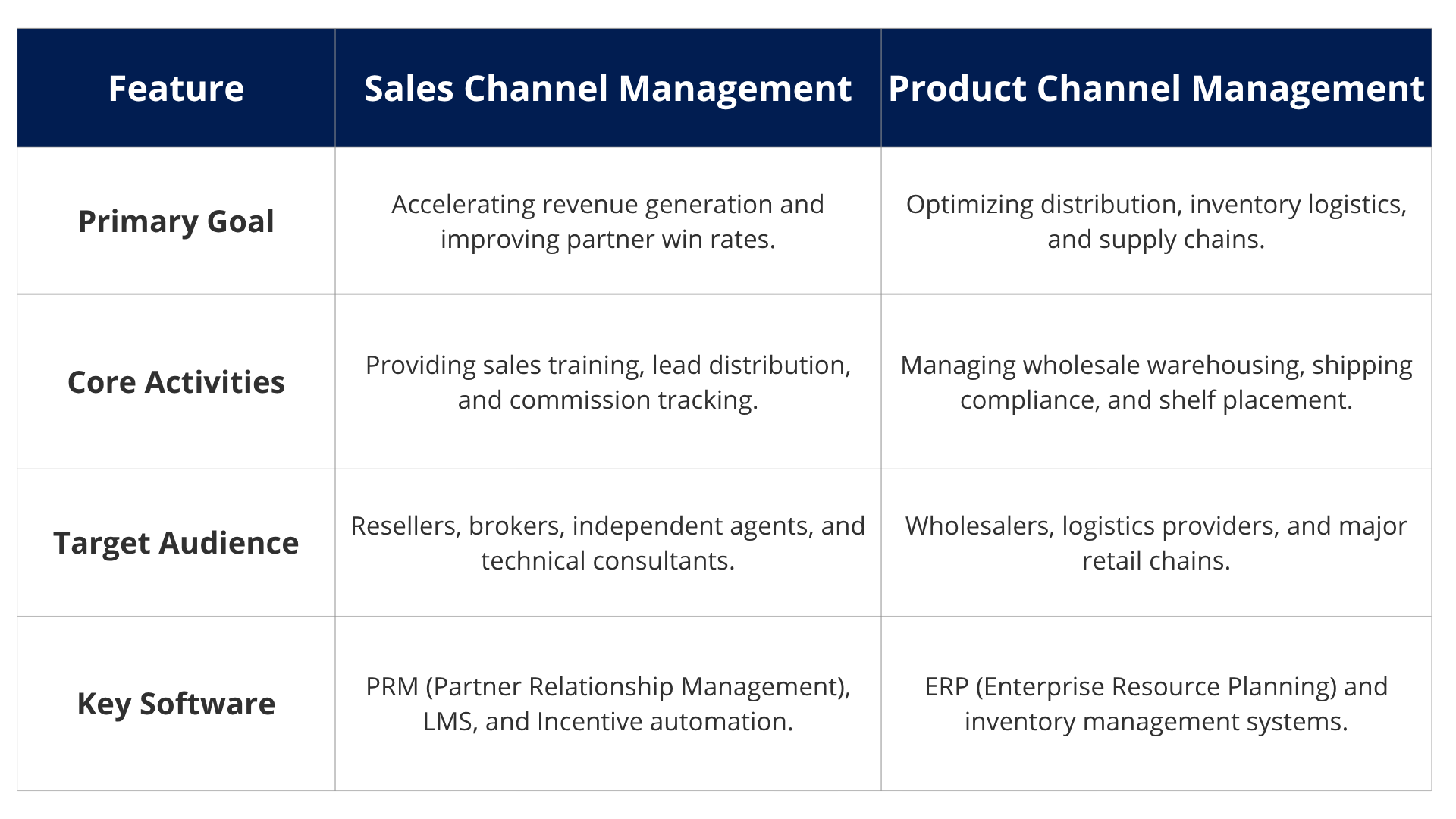
Sales vs. Product Management. Sales channel management focuses on accelerating revenue and win rates, while product channel management optimizes logistics, physical distribution, and supply chains.
Spreadsheets are the enemy of scale. Disjointed manual tracking creates data silos and payment errors. Successful management requires integrated ecosystems that connect directly to your CRM.
Channel management is essential because the modern era of partner exclusivity is over; partners will sell for the brands that make it easiest to win. By shifting from manual tracking to automated, CRM-native platforms, businesses can orchestrate mutually beneficial ecosystems. Ultimately, treating partners as an extension of your own organization turns loosely coupled networks into highly motivated advocates and powerful engines for scalable growth.
Growth inevitably reaches a ceiling when an organization relies entirely on its internal teams. To capture new markets and scale revenue exponentially, companies must build and empower networks of external partners. This critical business discipline is known as channel management. However, managing these third-party relationships has grown incredibly complex in the digital age, where partner exclusivity is fading and competition is fierce. In this comprehensive guide, you will learn exactly what this strategy entails, discover the core operational processes, explore real-world examples, and uncover the best practices needed to turn your distribution and sales networks into engines of predictable growth.
What Is Channel Management?
Channel management is the ongoing strategy, process, and technology a company uses to administer and optimize its relationships with external third parties—such as distributors, value-added resellers (VARs), retail vendors, and independent contractors.
Rather than simply viewing these entities as a transactional means to an end, modern channel management focuses on behavioral collaboration. It involves equipping partners with the right product knowledge, customizable marketing assets, and compelling incentives to ensure they prioritize your brand over competitors. Ultimately, the goal is to orchestrate a mutually beneficial ecosystem where partners are treated as a seamless extension of your own organization.
Why Channel Management Is Important for Businesses
Partners easily shift their focus to the brands that make it easiest to sell. Building a robust management infrastructure protects product margins, fosters loyalty, and accelerates market penetration.
The urgency to formalize these strategies is backed by powerful industry data:
The global sales enablement market—which heavily supports channel strategies—is projected to reach US$12.78 billion by 2030, according to Grand View Research.
Relying on manual tools like spreadsheets to manage these networks yields a dismal 20% to 37% utilization rate due to high error rates and immense manual effort.
Conversely, a 2024 State of Sales Enablement report by Seismic revealed that 89% of teams using integrated platforms to support and track their partners report a distinct competitive advantage.
Types of Channel Management
Different partner networks require tailored strategies. Here are the primary types:
Retail and Wholesale Distribution: Centers on moving physical goods through supply chains to reach the end consumer. It relies heavily on inventory management, volume-based rebates, and point-of-sale engagement.
Value-Added Reseller (VAR) Management: Focuses on partners who integrate your product into a broader solution or add proprietary services. This requires deep technical training, certifications, and complex deal registration tracking.
Contractor and Agent Networks: Manages independent professionals who recommend or install your products. It demands localized marketing support, quick incentive payouts, and mobile-friendly enablement.
The Channel Management Process
Building a successful partner ecosystem requires a structured, step-by-step lifecycle:
Recruitment and Onboarding: Identifying high-potential partners and guiding them through a streamlined setup process to integrate them into your brand's ecosystem.
Training and Enablement: Delivering ongoing product education via a Learning Management System (LMS) so partners fully understand your value proposition.
Marketing Support: Providing a Digital Asset Management (DAM) hub where partners can access and customize co-branded marketing materials to generate local leads.
Incentivization: Rewarding positive behaviors—such as completing training modules or hitting sales quotas—using points, rebates, or tier upgrades.
Performance Analytics: Tracking real-time data across the partner journey to evaluate success, optimize programs, and issue accurate financial settlements.
Examples of Channel Management
A great example of channel management is how top-tier brands use unified platforms to drive results:
Gutterglove: This major manufacturer successfully engaged contractors by educating them on installation, providing personalized marketing assets, and issuing automated rewards via optical character recognition (OCR) for proof of purchase.
Dunlop: To engage their complex network of distributors and resellers, Dunlop launched the "Conquistadores" B2B program. By incentivizing chain selling without requiring complex systemic integrations, they increased average daily items sold by 25%.
Google Cloud: Moving away from manual spreadsheets, Google Cloud implemented an automated partner incentive program native to Salesforce. They successfully gamified partner experiences by tracking and rewarding Market Development Funds (MDF) and opportunity pipelines.
Sales Channel Management vs Product Channel Management
While they work in tandem, these two disciplines serve different strategic functions within an ecosystem.
Common Challenges in Channel Management
Without the right infrastructure, businesses face several debilitating hurdles:
Data Silos and Manual Errors: Using static spreadsheets makes it impossible to integrate partner behaviors with core CRMs or accounting tools, leading to inaccurate payouts and partner frustration.
The "Perfect Stranger" Syndrome: Treating partners as interchangeable transactions rather than collaborating with them to build mutual success.
Lack of Mindshare: In loosely coupled networks, brands struggle to capture the attention of partners who are constantly targeted by competitors offering better incentives.
Best Practices for Effective Channel Management
Focus on Behavioral Acceleration: Do not just reward the final sale; incentivize the specific learning and marketing activities that eventually lead to that sale.
Eliminate Partner Friction: Ensure partners have access to a single, unified portal where they can seamlessly find training, marketing assets, and compensation dashboards.
Utilize Real-Time Analytics: Track exactly which enablement initiatives are driving pipeline velocity and adjust your strategies dynamically based on that data.
Adopt Modern Best Practices: Proactively update legacy systems to overcome operational challenges and accelerate overall partner performance.
Conclusion
Effective channel orchestration is the absolute key to scaling revenue far beyond the limitations of an internal sales force. To achieve this, businesses must abandon error-prone manual spreadsheets in favor of integrated ecosystems that connect directly to their CRM. By combining structured learning, customizable marketing assets, and automated incentives, companies can create a highly loyal partner network. Furthermore, understanding the distinct difference between sales channel management and product channel management ensures that you deploy the right tools for the right audience. To seamlessly elevate your partner strategies, Fielo’s Channel Performance Suite provides a comprehensive, AI-guided platform that unifies digital asset management, learning, and incentives natively within your CRM, driving measurable revenue impact.
Frequently Asked Questions
What is channel management?
It is the strategic administration and optimization of a company's external partnerships to effectively distribute products, expand market reach, and accelerate revenue.
What are the types of channel management?
The main types include retail and wholesale distribution management, Value-Added Reseller (VAR) programs, and independent contractor/agent networks.
What is the channel management process?
The process spans the entire partner lifecycle: recruitment and onboarding, continuous training and enablement, marketing support, behavioral incentivization, and real-time performance tracking.
What is an example of channel management?
A strong example is a manufacturer like Gutterglove offering a dedicated partner portal where contractors can access installation training, customize co-branded brochures, and earn rewards for registering deals.
What is sales channel management?
It is the specific discipline focused on enabling third parties to successfully sell your products, relying on tools like PRMs, learning management systems, and commission incentives.
What is product channel management?
It focuses on the logistics, physical distribution, and supply chain efficiency required to move goods from the manufacturer to wholesale warehouses and retail shelves.
What are the benefits of channel management?
It provides rapid scalability, lower direct customer acquisition costs, expanded geographic reach, and builds a dedicated network of external brand advocates.
What are the common challenges in channel management?
Common pitfalls include struggling for partner mindshare, operating with disjointed manual spreadsheets that cause payment errors, and failing to provide partners with adequate training and marketing resources.


.png)