Beginner’s Guide to Creating a Customer Loyalty Program
Beginner’s Guide to Creating a Customer Loyalty Program
Key Takeaways
Learning how to create a loyalty program that actually drives profitability requires shifting from basic, stagnant discounts to dynamic, data-driven relationships. Keep these foundational pillars in mind:
The Danger of "Set-and-Forget" Staleness: Simply giving out points does not guarantee engagement. Successful brands actively use zero-party data to continuously refresh their strategies and prevent customer fatigue.
Audience Research Over Imitation: The primary cause of program failure is a lack of deep audience insight. When you create your own loyalty program, its structure and reward mechanics must align directly with your unique consumers' lifestyles and brand values, rather than blindly copying competitors.
Simplicity and Attainability Build Trust: Complex earning rules and bureaucratic redemption processes destroy customer trust. Rules must remain simple, and milestones must be mathematically attainable to keep participants motivated.
Omnichannel Integration is Critical: Fragmented customer experiences—such as earning points online but being unable to redeem them in a physical retail store—will drive members away. Seamless, cross-channel functionality is non-negotiable.
In today’s highly competitive market, acquiring a new customer is only the first step. The true challenge, and the greatest source of profitability, lies in keeping them. If you are looking to build a sustainable revenue engine, you need a structured relationship strategy. This guide will teach you exactly how to create a rewards program for customers that unlocks long-term value and turns casual buyers into your most powerful brand advocates.
What Is a Consumer Loyalty Program?
A consumer loyalty program is a structured marketing strategy designed to reward customers with points, discounts, or exclusive experiences in exchange for their repeated business and ongoing engagement. It shifts the dynamic from a simple transactional exchange to a deep emotional connection built on shared values and recognized value. Ultimately, figuring out how to create a loyalty program effectively turns casual buyers into devoted brand advocates.
Just Because You Have a Loyalty Program Doesn’t Mean It’s Working
Many brands launch a points program and assume their customer retention strategy is complete. However, a "set-and-forget" mentality often leads to staleness and low engagement. To understand if your program is truly working, you must look at the data. The impact of a successful loyalty strategy on your bottom line is undeniable:
Massive Market Scale: The global loyalty market is projected to reach an astonishing US$214.7 billion by 2028, reflecting its strategic importance across industries.
Direct Behavioral Influence: A Bain & Company/ROI Rocket survey revealed that 63% of consumers make buying decisions specifically based on the loyalty programs they participate in.
Proven Financial Returns: According to the Global Customer Loyalty Report 2026, companies with effective loyalty programs report an average ROI of 5.3x.
Cross-Sell Lift: Personalizing offers through loyalty data can increase conversion and cross-sell rates by an impressive 30% to 40%.
If your program is not driving these kinds of metrics, it is time to rethink your execution. For a deeper dive, read our guide on types of customer loyalty.
Steps to Creating a Consumer Loyalty Program
Building an effective program requires a clear, step-by-step framework to ensure you avoid common pitfalls and maximize engagement.
Step 1 - Research your audience: A lack of knowledge about the target audience is the number one reason loyalty programs fail. Before launching, invest in behavioral research and data analysis to understand who your customers are and what they actually want.
Step 2 - Find your loyalty model: Determine the overarching structure when you create your own loyalty program. Will it be a simple earn-and-burn points system, a tiered program that fosters VIP exclusivity, or a highly gamified experience?
Step 3 - Set goals, keep it simple, and determine rewardable actions: Define what success looks like—whether that is reducing churn or increasing the average basket size. Then, keep the rules simple; excessive complexity and hidden fine print will break customer trust. Look beyond purchases and reward behaviors like writing reviews or making referrals.
Step 4 - Choose the right rewards: Rewards must be meaningful and attainable. If your goals are set too high, customers will quickly lose interest. Offer a mix of transactional benefits (like cashback) and non-monetary, enriching benefits (like exclusive VIP access).
Step 5 - Define a customer communication strategy: Communication is the heartbeat of your program. Plan a regular, highly personalized communication strategy that triggers based on participant criteria and behaviors, keeping the program top-of-mind without being intrusive.
Step 6 - Plan and launch the loyalty program: With your blueprint ready, use the right technology to bring it to life. Utilize agile platforms to test your rules, simulate ROI, and ensure seamless omnichannel functionality before you go live.
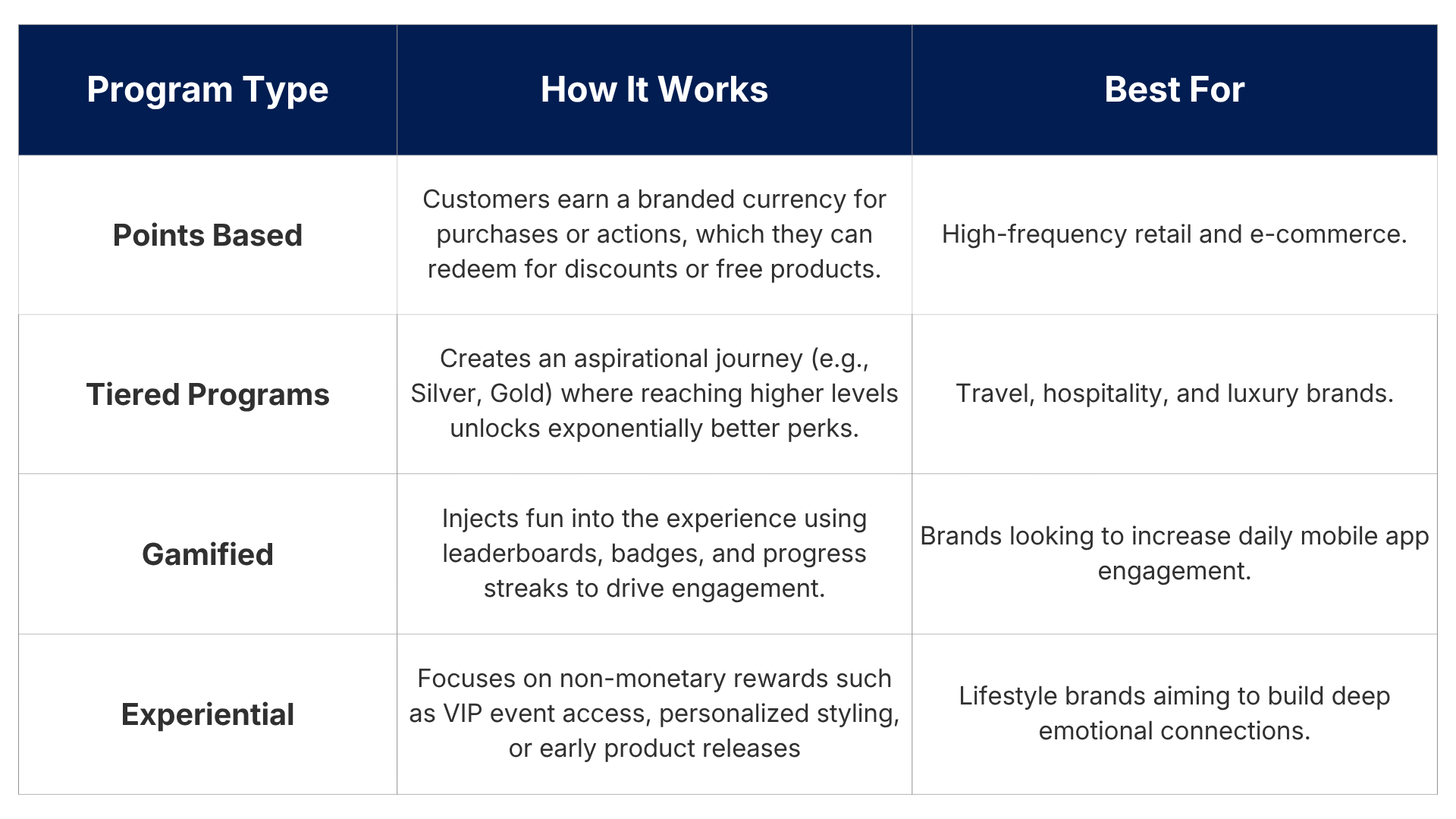
Types of Consumer Loyalty Programs
Understanding the right framework helps align your business goals with customer expectations.
Real-World Examples of Consumer Loyalty Programs
Leading brands leverage specialized platforms to drive massive engagement. Here is how they do it:
Terpel (Vive Terpel): This B2C gas station and energy company captured 750,000 new users in just one year. By incentivizing everyday transactions at the pump, the program drove incredible engagement and was directly credited with capturing half of a 2% total market share gain for the brand.
Clarins (Club Clarins): This luxury beauty brand wanted to deliver a unified customer journey. By synchronizing data across multiple entrances—both e-commerce and in-store physical counters—they successfully managed all client information in one place to deliver a highly personalized, premium brand experience.
Libra Shop (Club Libra): To encourage repeat purchases in a high-growth market, this retail chain utilized extreme gamification. They created a challenge where the first 50 members to visit the store 40 times automatically leveled up to the elite Gold Tier, driving massive repeat foot traffic.
Common Mistakes to Avoid When Building a Consumer Loyalty Program
Even well-funded programs fail when they ignore behavioral dynamics. Avoid these critical pitfalls:
Excessive Complexity: Confusing earning rules or hidden fine print frustrates users and destroys trust.
Staleness: A "set-and-forget" mentality leads to boring programs; without new gamified challenges, engagement drops rapidly.
Meaningless Rewards: Offering perks that customers do not care about, or setting redemption thresholds mathematically impossible to reach.
Faulty Channel Integration: If a customer earns points online but cannot redeem them in your physical store, the fragmented experience will drive them away.
Key Benefits of a Well-Designed Consumer Loyalty Program
When executed correctly, learning how to create a rewards program for customers acts as an engine for profitable growth.
Increased Customer Lifetime Value (CLV): Top-tier loyalty programs boost a brand's annual member revenue by 15% to 25% through increased purchase frequency and basket size.
Data-Driven Personalization: Loyalty platforms gather zero-party data, allowing you to tailor offers that lift cross-sell and conversion rates by up to 40%.
Organic Brand Advocacy: Highly satisfied, emotionally connected members become your best marketing channel, recommending your brand to peers and reducing your overall customer acquisition costs.
Technology and Tools Needed to Manage a Loyalty Program
Eliminates Spreadsheet Limitations: Replaces manual management and disconnected tracking with a robust, cloud-based platform capable of scaling as your program grows.
Ensures Omnichannel Consistency: Unifies customer data across e-commerce, mobile apps, and physical stores, preventing fragmented member experiences.
Automates Complex Rules Engine: Leverages AI-native technology to handle sophisticated tiering, immediate reward fulfillment, and trigger-based communications seamlessly.
Provides Dynamic Segmentation and Gamification: Employs advanced tools to cluster users dynamically (e.g., "Big Spenders") and deploy engaging mechanics like leaderboards or progress streaks.
Unlocks Predictive Analytics: Empowers brands to monitor behavioral trends and identify potential customer churn before it happens, protecting long-term revenue.
Conclusion
Understanding how to create a loyalty program is no longer just about issuing a digital punch card; it is a critical strategy for long-term differentiation and sustainable revenue. By thoroughly researching your audience, selecting the right model, choosing meaningful rewards, and avoiding the traps of complexity and staleness, you can transform casual buyers into fierce brand advocates.
To build and scale these efforts flawlessly, companies are turning to intelligent solutions. Fielo offers an AI-native Loyalty Copilot that acts as your personal Loyalty Strategist. Through a conversational AI interface, Fielo helps brands co-create tailored blueprints, automate complex tiering rules, and deploy enterprise-grade systems in days—reducing traditional design cycles by up to 70%. With the right strategy and the right platform, the choice to create your own loyalty program becomes an unstoppable engine for growth. For a step by step walkthrough, see how to set up a loyalty program.
Frequently Asked Questions
What is a consumer loyalty program?
It is a structured marketing strategy that rewards customers with points, discounts, or exclusive perks in exchange for their repeated business, driving both emotional and transactional preference.
How do you create a loyalty program for customers?
You discover how to create a rewards program for customers by thoroughly researching your audience, defining simple rules, offering meaningful rewards that align with their lifestyle, and utilizing a robust platform to manage and continuously optimize the experience.
What are the key steps to creating a consumer loyalty program?
The key steps include researching your audience, finding your loyalty model, setting clear goals and simple rules, choosing the right rewards, defining a communication strategy, and finally planning, launching, and iterating.
What types of loyalty programs are most common?
The most common types are points-based systems, aspirational tiered programs, gamified programs using leaderboards and badges, and experiential programs focused on VIP perks.
What rewards work best in a consumer loyalty program?
The best rewards are a mix of tangible (monetary savings) and intangible (emotional or VIP experiences) benefits that are highly relevant to the customer's lifestyle and attainable without excessive effort.
Why do many loyalty programs fail?
Programs frequently fail due to excessive complexity in their rules, irrelevant rewards, fragmented integration between physical and digital channels, poor communication, or a "set-and-forget" mentality that leads to program staleness.
How can loyalty programs improve customer retention?
They improve retention by consistently recognizing customers, delivering personalized offers based on zero-party behavioral data, and building an emotional connection that makes switching to a competitor far less appealing.
How do you measure the success of a loyalty program?
Success is measured by tracking key performance indicators such as the active member rate, reward redemption frequency, repeat purchase frequency, and overall Customer Lifetime Value (CLV).

.png)