
.png)

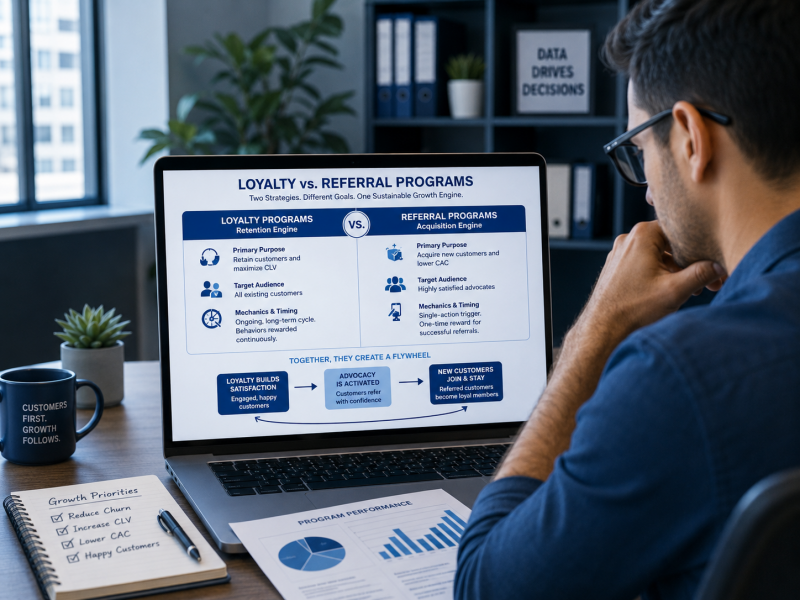
Growing a business sustainably means fighting two battles simultaneously: winning new buyers and keeping the ones you already have. To achieve this, companies rely heavily on customer growth strategies, with referral and loyalty programs leading the charge. However, treating these two distinct initiatives as identical "rewards" is a common mistake that can dilute their impact.
While they might share the overarching goal of driving revenue, loyalty and referral programs are fundamentally different tools designed for completely different stages of the customer lifecycle. Understanding the core difference between the two, and knowing exactly when to prioritize a retention engine versus an acquisition engine, is the first step toward designing a smarter, more holistic customer engagement program.
This guide explores the definitions of each strategy, its key differences, and how brands can seamlessly combine them into a powerful referral loyalty program that maximizes long-term profitability.
What Is a Loyalty Program?
A loyalty program is a structured benefit ecosystem designed to build long-term emotional and transactional fidelity with existing customers. Instead of a one-off discount, it provides ongoing incentives, such as points, tiered perks, or exclusive experiences, that motivate buyers to return consistently.
Modern loyalty programs act as sophisticated customer intelligence engines. Through mechanics like dynamic segmentation, gamification (badges, streaks, progress bars), and real-time personalization, these programs create a meaningful customer journey. The strategic goal is to reduce churn and maximize Customer Lifetime Value (CLV).
What Is a Referral Program?
A referral program, often sitting within the broader category of customer advocacy, is an incentive strategy designed to motivate your highly satisfied customers to actively promote your brand to others.
Instead of focusing on repeat purchases, a referral program rewards customers for specific advocacy behaviors, such as referring a friend, writing a product review, or sharing brand content on social media. By offering a bonus for successful referrals, brands turn their best customers into active promoters, leveraging peer-driven credibility to generate new leads and drive sales.
Core Differences Between Loyalty and Referral Programs
While both are powerful customer incentive solutions, loyalty and referral programs diverge in three key areas:
- Primary Purpose: The main goal of a loyalty program is interaction and retention, keeping existing customers engaged so they buy more frequently and increase their average basket size. The main goal of a referral program is acquisition, using your current base to acquire entirely new customers.
- Target Audience: Loyalty programs target your entire existing customer base, managing different clusters from "Big Spenders" to "Unpredictables" through personalized journeys. Referral programs specifically target your highly satisfied "Advocates" who are willing to vouch for your brand.
- Mechanics and Timing: Loyalty is a continuous, long-term cycle where behaviors are constantly monitored and rewarded over a lifetime. Referral programs often act as single-action triggers, a customer provides a referral, the new buyer makes a purchase, and the referrer receives a specific, one-time reward (like a gift card or a discount).
When Should Businesses Choose Loyalty Programs Over Referral Programs?
A business should prioritize building a loyalty program when its primary challenges revolve around high customer churn, low repeat purchase rates, or a lack of zero-party data. If your brand treats buyers like "perfect strangers" because you lack insights into their preferences, a loyalty platform is essential for gathering data and personalizing offers.
Conversely, businesses should lean toward a referral program when they already have a stable base of highly satisfied customers but are struggling with high Customer Acquisition Costs (CAC). If your product relies heavily on trust and peer recommendations, such as B2B software, real estate, or premium consumer goods, referrals are often the most cost-effective way to generate high-quality new business.
How Loyalty and Referral Programs Can Complement Each Other
Fortunately, businesses do not have to choose just one. Referral and loyalty programs are highly complementary.
A loyal customer is naturally your best potential advocate. When a customer feels deeply connected to a brand because they are recognized in a VIP loyalty tier, they are far more likely to recommend the brand to others. By integrating both strategies, you create a self-sustaining loop: the loyalty program builds the satisfaction and emotional connection required to create advocates, and the referral program activates those advocates to bring in new loyalty members.
Designing a Referral Loyalty Program
The most effective way to leverage both strategies is to design a unified referral loyalty program, where referral mechanics are embedded directly into the loyalty ecosystem.
Instead of managing two separate platforms, businesses combine loyalty rewards with referral incentives to drive both retention and acquisition simultaneously. For instance, when a customer successfully refers a friend, instead of receiving a generic cash discount, they are rewarded with a massive points injection or an automatic upgrade to a higher loyalty tier.
This rewards their advocacy while keeping them locked into the loyalty ecosystem for future purchases. Through platforms that automate these rules, like Fielo’s, advocates earn rewards seamlessly with automatic tracking and instant recognition.
Common Challenges in Loyalty and Referral Programs
Whether running them separately or combined, businesses often face several pitfalls that cause these programs to fail:
- Excessive Complexity: Confusing rules or complex redemption processes make customers feel cheated, eroding trust.
- Staleness (Set-and-Forget): A lack of new challenges, gamification, or fresh rewards causes programs to become boring.
- Meaningless Rewards: If the perceived value of the reward does not match the effort required to get it, customers won't participate.
- Poor Communication: Insufficient communication makes members forget the program exists, while excessive communication feels like spam.
- Faulty Channel Integration: If a customer can only redeem their referral bonus on a website but not in the physical store, the fragmented experience creates frustration.
Conclusion
In summary, while loyalty programs focus on retaining existing customers and increasing their lifetime value, referral programs focus on turning those satisfied customers into lead-generation engines to acquire new buyers. However, the most successful brands understand that these two strategies are not mutually exclusive. By designing a combined referral loyalty program, businesses can create a powerful ecosystem that supports both long-term retention and organic acquisition.
To execute this flawlessly without falling into common traps like excessive complexity or staleness, companies need an agile, robust platform. Modern AI-native solutions empower brands to manage both seamlessly. Fielo Loyalty Copilot, for example, acts as an AI strategy assistant that helps businesses co-create tailored loyalty and advocacy blueprints, reducing traditional program design cycles by up to 70% while automating the complex rules that drive true engagement.
Frequently Asked Questions
What is a referral loyalty program?
It is an integrated strategy where advocacy actions (like referring new customers) are rewarded using the mechanics of a loyalty program, such as granting loyalty points or tier upgrades to the referrer.
How are referral and loyalty programs different?
Loyalty programs primarily aim to retain existing customers and increase lifetime value. Referral programs aim to acquire new customers by incentivizing the existing customer base to promote the brand.
Can loyalty and referral programs work together?
Yes. A strong loyalty program nurtures satisfied customers, who then become the perfect candidates to activate in a referral program, creating a continuous loop of retention and acquisition.
Which is better for customer acquisition: referral or loyalty programs?
Referral programs are specifically designed for acquisition. They leverage the peer-driven credibility of your current users to attract new, high-quality prospects at a lower cost.
Which program is more effective for customer retention?
Loyalty programs are built for retention. They use tiers, gamification, and personalized rewards to build long-term emotional and transactional fidelity, keeping customers coming back.
What rewards work best in loyalty and referral programs?
Rewards must be meaningful and attainable. Points-based systems, direct cashback, VIP experiences, and gift cards work incredibly well, provided the reward's value matches the effort expended.
How do businesses measure the success of loyalty and referral programs?
Success should be measured through analytics tracking metrics like active member rates, redemption frequency, successful advocate-driven conversions, and the overall incremental revenue (ROI) generated.
Are referral programs more cost-effective than loyalty programs?
Referral programs often boast a low Customer Acquisition Cost (CAC) since you only pay for successful conversions. However, effective loyalty programs report an average ROI of 5.3x, making both highly cost-effective engines.
What types of businesses benefit most from referral and loyalty programs?
Virtually all businesses benefit, from retail and e-commerce focusing on frequent purchases, to B2B networks (like manufacturing and software) where partner referrals and ongoing engagement drive massive revenue growth.