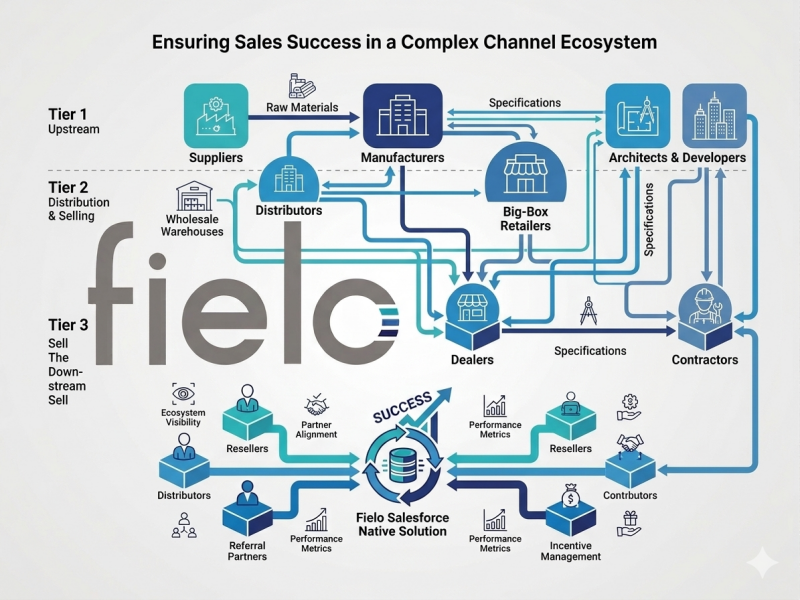
.png)


What Is a Channel Strategy?
A channel strategy is built on one or more distribution methods to get a vendor’s products or services to the end customer in the most efficient and cost-effective manner possible. It is a structured plan that defines how a business delivers its products or services to end customers through one or more distribution channels — such as direct sales, resellers, distributors, or digital platforms.
It aims to reach target markets while maximizing coverage, profitability, and customer satisfaction. Developing a strong channel strategy framework involves identifying target segments, selecting the right partners or channels, and aligning incentives, pricing, and marketing programs to create mutual value. This article will present how to create a channel strategy, designing the optimal mix of routes to market that supports the company’s overall sales and growth objectives.
Benefits of a Channel Strategy
A channel strategy costs time and effort. But if done effectively, a solid channel network will provide the following benefits:
- Improve product distribution, making them available to a larger number of customers.
- Increase customer acquisition, given the better distribution of products.
- Deliver the right product or value to specific customer segments without increasing costs. Different channels can distribute different products to specific customers that will find greater value in the offer.
- Will help decrease costs, such as inventory storage, pre-and post-sale services, etc.
- Lowers risk. Channels are buying the manufacturer’s goods and will have strategies of their own to sell them and make a profit.
- Help build, propagate, and strengthen the manufacturer’s brand.
Types of Channel Strategies
Direct sales
The most basic of channel strategies. In direct sales, the manufacturer sells directly to the end customer without any indirect channels/intermediaries. The manufacturer has its own sales team and closes deals directly with the customer. This strategy is usually used when the manufacturer sells perishable products and whose customers are located in a reduced geographical area.
Indirect sales
In indirect sales, there is at least one intermediary or channel involved in the distribution process of the product to the end customer. The intermediaries that might be involved in a company’s indirect sales strategy are value-added resellers, retailers, distributors, consultants, SIs (System Integrators), OEMs (Original Equipment Manufacturers), ISVs (Independent Software Vendors), distributors, agents, and wholesalers.
Indirect sales classification
- One-tier channel: there is only one intermediary between the manufacturer and the end customer. The intermediary is typically a reseller or retailer. This strategy is used when the product needs to be distributed relatively quickly and when working with durable products like clothes, appliances, hardware, etc.
- Two-tier channel: there are two intermediaries (usually wholesaler and retailer, or distributor and reseller) between the manufacturer and the end customer. This strategy is widely used when:
- The products are standardized and relatively cheap.
- The products need to be spread over a larger geographical area.
- The amount purchased is small.
- The products are standardized and relatively cheap.
- Three-tier channel: In addition to a wholesaler and retailer (or distributor and reseller), there is another intermediary, which is the agent. Agents handle the distribution of the product in a specific geographical area. This strategy is chosen when the distribution of the product has to reach huge areas (probably countrywide) and the demand for the product is high.

What Channel Strategy to Choose
A company has to consider certain aspects of their business and the market in which they want to participate to determine which strategy best suits their business needs – direct or indirect. There are 4 factors to consider when choosing the right channel strategy:
- The market: this factor takes into consideration the customers, their purchasing habits, and geography. If the manufacturer’s end customers do not purchase frequently, but when they do, they buy in bulk; are confined to a limited geographical area; and require advanced technical knowledge of the product, the best alternative is to choose direct sales.
On the other hand, if customers prefer to be able to purchase all their products in one place, they buy frequently, but not in large quantities; they are geographically spread over a larger area, and there is no need for a lot of pre-or post-sales technical services, the indirect sales approach is recommended.
- The product: the three parameters to consider are price, durability, and complexity of the product. If a manufacturer is selling a perishable product, it cannot afford to choose a long indirect sales strategy as products will perish during their distribution. Similarly, expensive products are usually distributed directly to the end customer or have few intermediaries given the increase in the price of a long distribution chain. And finally, for complicated products in which the customer needs to have a close relationship with the manufacturer for comprehension or service purposes, shorter distribution strategies are also preferred.
- The competition: studying what the competition does and determining if their strategy of using long-chain or short-chain channel distribution brings the right results will help determine what is the best strategy to use.
- The company: just as studying the competition is important, it is also important to know your company’s strengths. Determining the company’s strengths and weaknesses will help indicate the best channel strategy to use.
- Are there enough resources to set up your own distribution channel?
- What level of management expertise is there? This will determine if it will be necessary to rely on third-party distributors.
- Do you have a large range of products that need to be distributed over a large geographical area?
- What are your future business goals?
Understanding these four factors is the first step in answering how to create a channel strategy that fits your specific business context.
How to Enhance Channel Strategies With Incentive Programs
When working with distributors, a manufacturer has to make sure to build a healthy relationship with each channel to avoid errors and low sales and ensure that goals are achieved. An excellent way to manage these different relationships is through a channel incentive program where proper communications, eLearning, gamification, and other tools can be used to build a successful long-term relationship. To enhance your channel strategy through an incentive program, you can do the following:
1. Consolidate Your Incentive Program
Top performers are more likely to have a single program across the company. In 2020, Cisco consolidated their siloed partner programs into a cohesive framework structured around their channel partner's roles with their customers.
2. Customize Your Incentive Program
Incentive programs should align with the partner's business model. Not just the rewards but the assets too. Datasheets, infographics, whitepapers and eBooks need to be customized to the type of industry, the target profile and the channel partner's strengths.
3. Offer Support to Align the Channel Partner's behavior to Your Vision
Help channel partners understand your products, services and your pricing for customers. This can be done by sharing relevant content with them, training them on new updates / specifications, quizzes to gauge their understanding and co-selling opportunities to inform and influence their behavior.
4. Blend Reward Currencies to Maximize Channel Returns
Use cash, non-cash, merchandise, gift cards, tiers, and trips to keep it interesting and challenging for the channel partners. You can also provide incentives in the form of joint business planning and co-selling opportunities.
5. Use Gamification and Keep It Real
Intuitive portals with gamified elements keep it challenging and engaging for channel partners. The dashboards can help them see where they stand with respect to achieving goals.
Key Components of a Successful Channel Strategy
A successful channel strategy goes beyond choosing intermediaries; it aligns routes to market with your business model, target customers, and growth ambitions. The following components are essential building blocks of a strong channel strategy framework.
- Clear objectives and target segments: Define what you want to achieve (e.g., market expansion, cost reduction, higher margins) and which customer segments each channel should serve.
- Thoughtful channel mix: Decide when to use direct sales, one‑tier, two‑tier, or three‑tier indirect models based on product type, geography, purchase volume, and required speed to market.
- Defined partner roles and value proposition: Clarify where distributors, resellers, agents, and other partners fit in the journey, and explain what makes working with your company attractive and profitable for them.
- Aligned pricing, margins, and incentives: Set pricing structures, discounts, rebates, and rewards that prevent channel conflict and motivate partners to prioritize your products.
- Robust enablement and support: Provide training, co-marketing resources, sales tools, and technical support so partners can sell, implement, and service your offer effectively.
- Processes and governance: Establish rules of engagement, lead registration, deal protection, and conflict resolution mechanisms to keep collaboration structured and fair.
- Measurement and optimization: Track performance by channel (revenue, coverage, costs, satisfaction, and loyalty) and refine your strategy as markets, products, and partner ecosystems evolve.
Conclusion
A well-designed channel strategy is one of the most effective ways to scale distribution, reach new customer segments, and grow revenue without exponentially increasing internal costs. By choosing the right mix of direct and indirect channels, clarifying partner roles, and aligning incentives and enablement, companies can turn their channel ecosystem into a true competitive advantage rather than a simple delivery mechanism. As markets evolve, the most successful organizations revisit and refine their channel strategy framework regularly, using data and partner feedback to stay efficient, profitable, and closer to their end customers.
Frequently Asked Questions
What is a channel strategy?
A channel strategy is the plan a company uses to deliver its products or services to end customers through one or more distribution channels in the most efficient and cost-effective way possible.
Why is a channel strategy important for business growth?
A strong channel strategy helps businesses expand market coverage, increase product availability, reduce distribution costs, and reach new customer segments faster than relying on direct sales alone.
What are the main types of channel strategies?
The main types are direct sales (selling straight to the end customer) and indirect sales, which can be structured as one-tier, two-tier, or three-tier channels using intermediaries such as resellers, distributors, retailers, and agents.
How do you build an effective channel strategy?
To build an effective channel strategy, define your objectives and target segments, choose the appropriate mix of direct and indirect channels, clarify partner roles, align pricing and incentives, support partners with enablement, and continuously measure results for optimization.
What are channel partners in a channel strategy?
Channel partners are third-party organizations - such as distributors, resellers, retailers, consultants, and system integrators - that help a manufacturer or vendor market, sell, distribute, or support its products as part of an indirect sales model.
How does a channel strategy differ from a distribution strategy?
A distribution strategy focuses mainly on the physical flow and logistics of getting products from manufacturer to customer, while a channel strategy takes a broader view that includes partner roles, sales and marketing responsibilities, incentives, and customer coverage models.
What are the key components of a successful channel strategy?
Key components of a channel strategy framework include clear objectives and segmentation, a well-chosen channel mix, defined partner roles and value propositions, aligned pricing and incentives, strong enablement, governance processes, and performance measurement.
How do you choose the right channel partners?
Choose partners whose customer base, geographic reach, capabilities, and strategic goals align with yours, and evaluate their financial health, reputation, sales capacity, and willingness to invest in joint go-to-market activities.
What metrics should be used to measure channel strategy success?
Useful metrics include revenue by channel, market coverage, sell-through rates, partner profitability, customer acquisition and retention, inventory and logistics costs, and partner engagement or loyalty indicators.
What are common challenges in executing a channel strategy?
Common challenges include channel conflict between direct and indirect teams, misaligned incentives, lack of partner enablement, limited visibility into end-customer data, and inconsistent execution across regions or partner types.
See How To Win The Hyper-Competitive Channel Partner Market With Fielo