.png)

The Customer Life Cycle (CLC), sometimes called the customer lifetime cycle, represents the complete journey a consumer takes with a brand, from initial awareness through purchase, customer retention, and advocacy. Understanding this cycle is key to driving sustainable business growth, customer lifecycle value, and customer retention. By mapping how customers interact with your brand over time, businesses can design targeted strategies to nurture loyalty and maximize lifetime value. In this article, you'll learn what the customer life cycle is, its stages, how it differs from the customer journey, and actionable ways to optimize each stage for better results.
What Is The Customer Life Cycle (CLC)?
The Customer Life Cycle (CLC) describes the series of stages a customer experiences when engaging with a brand, product, or service, from the first touchpoint to repeated purchases and eventual advocacy. It helps organizations understand customer behaviors and expectations at every phase. By studying this cycle, businesses can adapt marketing, sales, and service efforts to guide customers smoothly from awareness to loyalty, ensuring relationships last longer and deliver greater value over time.
Why The Customer Life Cycle Is Important For Businesses
Understanding the customer life cycle is essential because it reveals how customers move from being prospects to long-term advocates. When businesses align sales, marketing, and service strategies with each stage of the cycle, they can deliver more relevant experiences and reduce churn. It also enables data-driven decision-making by identifying where customers drop off or where engagement peaks. Ultimately, mastering the CLC allows companies to increase retention rates, boost customer lifetime value, and create a culture centered on continuous relationship building rather than one-time transactions.
Customer Life Cycle Vs Customer Journey
Though related, the customer life cycle and the customer journey focus on different perspectives.
- The Customer Life Cycle is a strategic model that identifies key stages of engagement - from awareness to advocacy - to guide marketing and operational decisions. It looks at the overall relationship over time.
- The Customer Journey, on the other hand, maps the specific experiences and touchpoints a customer encounters during interactions with a brand. It’s more tactical, detailing emotions, actions, and pain points at each stage.
In simple terms, the journey is the map of customer experiences, while the life cycle is the framework businesses use to understand and influence customer longevity. Together, they form the foundation of customer relationship management (CRM) and experience optimization.
Stages Of The Customer Life Cycle
The customer life cycle can be divided into five main stages, each representing a different relationship level between customer and brand:
- Awareness: The stage where potential customers first become aware of a brand through advertising, social media, content, or referrals. The goal here is visibility and lead nurturing.
- Consideration: Prospects research and compare solutions. Businesses should build trust through education, reviews, and clear value propositions.
- Acquisition (Purchase): Customers make their first purchase. A seamless buying process and onboarding experience are critical to reduce friction and set expectations.
- Retention: Beyond the first purchase, companies must maintain engagement through excellent service, loyalty programs, or personalized communication. This stage focuses on consistent value delivery.
- Advocacy: Satisfied customers become promoters, sharing their positive experiences through referrals, testimonials, or online reviews. Advocacy strengthens credibility and fuels new customer acquisition.
These stages are cyclical, advocacy can generate new awareness, restarting the process with fresh prospects.
Customer Life Cycle Value Explained
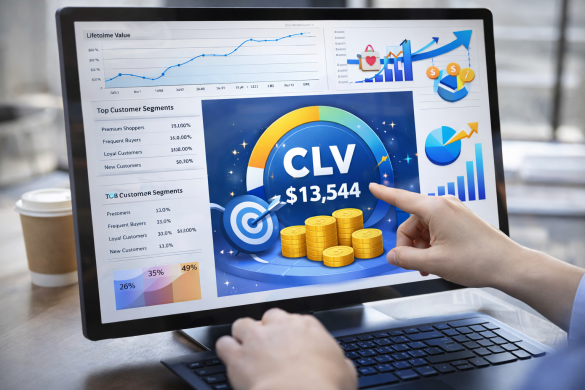
Customer Life Cycle Value (CLCV) refers to the total financial worth a customer contributes across the entire life cycle, from acquisition to advocacy. It combines metrics like purchase frequency, retention duration, and average order value to estimate total profit generated. By analyzing CLCV, organizations can prioritize resources around high-value customer segments and identify which stages of the cycle yield the best return. Measuring CLCV also helps align marketing and loyalty strategies with long-term growth objectives rather than short-term sales.
Strategies To Optimize Each Stage Of The Customer Life Cycle
Businesses can strengthen performance at every phase of the life cycle with targeted strategies:
- Awareness: Use storytelling, SEO, and content marketing to attract and educate potential customers.
- Consideration: Provide social proof, free trials, and comparison tools to guide decision‑making.
- Acquisition: Reduce friction during checkout and personalize onboarding for smooth adoption.
- Retention: Implement loyalty and reward programs, personalized engagement, and proactive support.
- Advocacy: Encourage reviews, referrals, and community participation through reward initiatives.
Regularly analyzing performance across these stages ensures businesses continuously refine how they attract, delight, and retain customers.
Customer Life Cycle Examples
Spotify: Through a freemium model, Spotify attracts new users (awareness), converts them with tailored recommendations (consideration), and upgrades them to paid plans (acquisition). Continuous personalization and playlists ensure long-term retention.
Uber: The company shows how a digital platform moves users from first download to advocacy. In the awareness stage, people discover Uber through word of mouth, app store presence, ads, or surge‑time prompts from friends. Once they consider the service, they often test it with promo codes or first‑ride discounts. During acquisition, a smooth sign‑up flow and real‑time tracking build trust and reduce friction. Retention is driven by saved locations, loyalty benefits (like Uber One), and multi‑product access (UberX, Comfort, Uber Eats). Satisfied riders then reach advocacy, recommending Uber to friends or sharing referral codes, which restarts the cycle with new users.
Target: This case illustrates how a large retailer blends data and personalization across channels. Awareness begins with mass media, digital ads, social content, and weekly promotions. In consideration, customers browse the website or app, check prices, read reviews, and compare products. Acquisition occurs online or in‑store, supported by easy checkout, curbside pickup, or same‑day delivery. Target focuses on retention through its Target Circle and Target Circle Card, and personalized offers that reflect life events (such as new parents receiving baby‑related deals), plus reminders about unused rewards. Over time, delighted shoppers move into advocacy, posting hauls on social media, leaving positive reviews, and recommending Target to their networks, feeding new awareness and restarting the cycle.
These examples highlight how brands create value through consistent engagement tailored to each stage of the life cycle.
Common Customer Life Cycle Mistakes To Avoid
Companies often stumble when they overlook the life cycle as a continuous process. Common pitfalls include:
- Overemphasizing acquisition while neglecting retention.
- Ignoring post-purchase engagement, leading to declining loyalty.
- Failing to use data analytics to understand customer behavior at different stages.
- Inconsistent communication that disrupts the relationship flow.
- Neglecting advocacy programs, missing organic referral opportunities.
Avoiding these mistakes ensures brands maintain steady growth and maximize their customer base’s lifetime potential.
Conclusion
The customer life cycle provides a structured view of how relationships evolve between customers and brands. By understanding and optimizing each stage - from awareness to advocacy - businesses can enhance loyalty, reduce churn, and increase profitability. Today's most successful organizations don't view customer relationships as linear transactions but as ongoing partnerships built on value and trust. Investing in the customer lifetime cycle turns data into decisions, experiences into loyalty, and loyalty into long-term business growth, lifting overall customer lifecycle value in the process.
Frequently Asked Questions
What is the customer life cycle?
It’s the complete process a customer goes through when interacting with a brand, from becoming aware of it to becoming a loyal advocate.
What are the main stages of the customer life cycle?
The five primary stages are awareness, consideration, acquisition, retention, and advocacy.
What is the difference between the customer life cycle and the customer journey?
The life cycle provides a high-level strategic overview, while the journey maps specific touchpoints, emotions, and actions at each stage.
What does customer lifetime cycle mean?
It refers to the entire span of a customer’s relationship with a company, encompassing every interaction and transaction.
How does the customer life cycle impact business growth?
It helps identify where engagement can improve, ensuring retention, higher lifetime value, and consistent revenue.
What is customer lifecycle value?
It’s the total worth a customer contributes through all stages of their relationship with a brand.
How is customer lifecycle value different from customer lifetime value (CLV)?
CLV focuses on total revenue or profit from an individual customer, while lifecycle value assesses value creation across all engagement stages collectively.
Why is the retention stage important in the customer life cycle?
Retention ensures long-term revenue, deepens trust, and fuels advocacy, making it the foundation for sustainable growth.