.png)


The impact of value-driven business partnerships is immense. While building B2B alliances takes time and effort, the rewards from B2B partnership strategies are clear: better leads, higher sales, and a stronger ecosystem for all stakeholders.
To build a successful B2B partnership, we need to focus on three core steps:
- Identify opportunities for shared growth.
- Define the right type of partnership.
- Set clear roles, responsibilities, and expectations.
In this blog post, we will explore how to establish win-win partnerships, partner programs, and define their value, and share tips for building strong, successful relationships.
What is a B2B partnership?
A B2B partnership is a collaboration between two or more companies designed to create mutually beneficial relationships that drive growth and deliver significant value to all parties involved. These partnerships can focus on areas such as product development, marketing, or broader business opportunities.
Unlike transactional deals, these alliances - common in industries like tech, SaaS, and consulting - leverage complementary strengths, like integrating technologies or joint marketing, to deliver more value to shared customers without direct competition. Successful B2B partnerships often involve formal agreements, co-selling efforts, and ongoing relationship management to drive revenue and innovation for all parties involved.
Importance of B2B partnerships
B2B partnerships are not a side tactic or a co-marketing checkbox. They are structural growth levers that give companies distribution, credibility, and capability they cannot build alone at the same speed. In a market where customer acquisition costs continue to rise and buyers filter aggressively against generic outreach, partnerships offer a way to operate inside existing trust ecosystems rather than fighting for attention from zero.
Three market shifts make B2B partnerships more important than they have ever been:
● Rising acquisition costs. SaaS benchmarks show customer acquisition costs increasing at roughly 14% per year, while outbound response rates soften and paid channels grow more crowded. Partnerships give companies access to warm, pre-qualified audiences at a fraction of paid acquisition cost, improving the economics of pipeline generation.
● Buyer skepticism and filtering. Modern buyers screen out interruptions harder than ever. What they remember is not the ad, but the trusted context in which a recommendation appeared. B2B partnerships let a brand show up alongside another organization that has already earned that trust, shortening the path from awareness to consideration.
● Fragmented distribution. Reaching a target audience through any single channel is harder and more expensive than it was five years ago. Partnerships let two businesses share distribution and reach customers where they are already engaged, reducing the effort and cost required to earn attention.
The impact of a well-designed B2B partnership compounds across the funnel. Marketing benefits from shared credibility and warm audiences. Sales gains warmer introductions and contextual validation during deals. Customer success can coordinate retention and expansion through complementary services or integrations. When these effects align, partnerships shift from being a promotional lever to being growth infrastructure that improves the economics of every other channel around them.
This is why the strongest B2B growth engines treat partnerships as a strategic layer built into the go-to-market plan, not a campaign that gets bolted on later. The best partnerships align distribution, credibility, and capability so that two businesses combined deliver more value than either could deliver alone.
Types of B2B partnerships
Now, let’s explore the main types of partnerships a B2B business can establish:
1. Mentors and Advisors:
Industry experts often mentor small businesses to help them grow. For smaller companies, these partnerships can be incredibly valuable, expanding their networks and connecting them with other experts or potential customers.
2. Non-Competitive Businesses:
Partnering with companies in your industry that offer complementary products or services can drive mutual growth. For example, a digital marketing agency might collaborate with web development or software companies providing non-competing services to similar audiences. Such partnerships enable referrals, service collaboration, and business growth for both parties.
3. Business Associations and Trade Organizations:
Local associations like the Chamber of Commerce offer excellent opportunities for partnerships. These groups often organize events that are perfect for networking, building relationships, and generating leads.
4. Media Companies:
Partnering with media companies or trade publications can amplify your marketing efforts. By aligning with outlets that publish content relevant to your industry and audience, your business gains visibility among the companies you want to attract as clients.
5. Distribution and Sales:
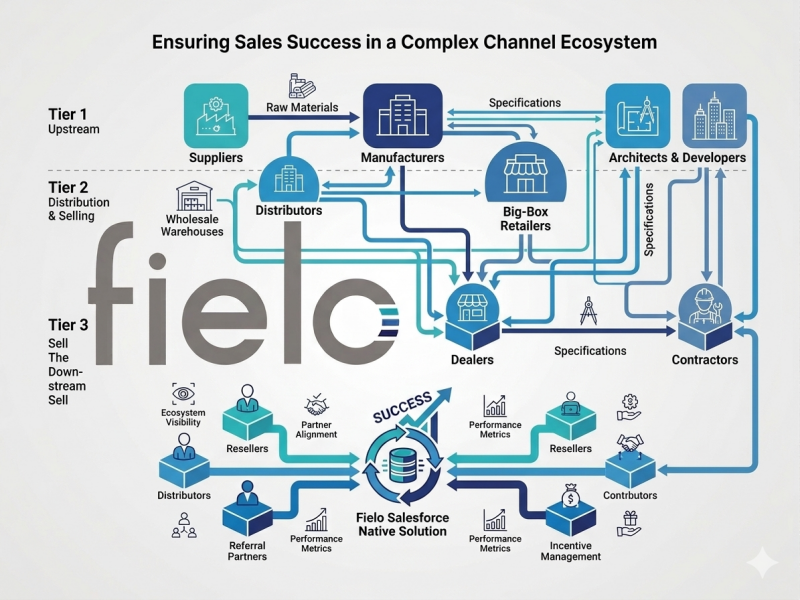
Collaborating across the channel ecosystem opens numerous possibilities, such as:
- Merchandise Vendors: Think of all the rewards featured in redemption catalogs.
- Channel Partner Organizations: With strengths like cross-selling capabilities or extended geographic reach
- Automation Platforms: Tools like Fielo streamline incentive programs for channel partners.
- Suppliers and Vendors: Providers of high-quality ancillary parts or essential components.
- Business Support Services: Partners offering marketing, HR, payroll, and other support functions.
The fundamental purpose of B2B partnerships is to help you focus on what you do best, while leveraging partnerships to drive growth and add value.
How do you create a B2B partnership?
1. Identify opportunities for growth and development
Before pursuing synergetic B2B partnerships, define what you’re looking for. Is it a lead-sharing arrangement? A co-marketing or co-branding opportunity? Or perhaps bundling your product with others for enhanced sales prospects?
Partnerships can sometimes emerge organically through networking and industry connections. However, in most cases, you’ll need to actively seek out companies that complement your offerings, provide related services, or target a similar audience.
2. Determine the type of B2B partnership
Referencing the previous section, B2B partnerships can generally fall into two broad categories:
- Strategic Alliances
- These involve partnering with businesses in your industry or related fields to create mutual value. These partnerships often focus on leveraging complementary capabilities, sharing insights, or expanding market reach through collaboration.
- Joint Ventures
- These partnerships center on collaboration for specific projects or initiatives. Both parties share responsibilities, including financial costs, investments, and the resulting income
3. Outline roles, responsibilities, and expectations
To avoid misunderstandings, establish clarity around these questions:
- Who is covering what costs?
- What are the expected outcomes and consequences?
- How will profits and losses be divided?
- What’s the process for ending the partnership amicably if needed?

The Best B2B Partnerships to Grow Sales
Did you know that 95% of Microsoft’s revenue comes through partners?
One of the most impactful relationships for driving growth is through channel partnerships. Structured B2B loyalty programs turn transactional channel relationships into long-term growth engines. These are strategic collaborations with third-party organizations like distributors, resellers, wholesalers, and licensed service providers, rewarded for their performance in boosting sales and revenue.
Channel partners focus on generating additional sales through product promotions, events, and other sales-related activities. These B2B partnerships benefit both sides: the partner earns rewards for each new deal closed, and your business expands its reach and revenue.
Why Invest in Channel-Driven B2B Partnerships?
a. Expanding into New Geographies
Channel partners have local reach and credibility, enabling your business to enter new markets without a physical presence. For example, you don’t need to be based in Atlanta to sell there - your channel partner can build that client network for you. By leveraging your partner’s network, you can increase awareness, generate leads, and drive revenue while reducing the cost of acquiring new customers.
b. Tapping into Complementary Markets
Selling where your target audience is already buying is far more effective. For instance, if you sell keyboards, partnering with companies that sell PCs makes sense. Similarly, if you sell smartwatches, look for a channel partner specializing in electronic wearables. These complementary markets help you scale faster without starting from scratch.
c. Enhancing Product Value
Strategic B2B partnerships can elevate your product’s perceived value. For example, Microsoft collaborates with companies certified in Microsoft installations, adding significant value to both the product and the partnership.
Streamlining Your Channel Partnerships
As you grow your network of B2B partners, consider implementing a b2b partner program solution to manage and automate essential processes, such as:
- Deal Registration: Simplify and track sales deals.
- Training: Equip partners with the knowledge to sell effectively.
- Market Development Funds (MDF): Provide resources to support joint marketing efforts.
- Configure, Price, Quote (CPQ): Streamline quoting processes for partners.
- Incentives and Rewards: Motivate partners to sell your product or service.
A well-managed channel program not only strengthens your partnerships but also drives consistent, scalable growth.
Three Ways to Ensure Your Channel Partnerships Are Highly Successful
Establish Dynamic Reporting Processes
Use reporting tools that provide visibility for you and your partners. You should track their activities, and they should see their progress, rewards, and tier levels. A clear level or tier program helps everyone understand their status and goals.
Leverage Different Channel Partners for Different Sales Funnel Stages
Match partner roles to their strengths in the sales funnel. Reward those who invest in learning your product with better leads and benefits. For newer partners, focus on training and raising awareness among their customers. Tailored incentives simplify success.
Create an Immersive and Responsive Partner Experience
Build a B2B partner portal that does more than track rewards. It should give partners access to product details, marketing materials, training, and other resources. A strong portal ensures partners have the tools they need to succeed.
Real-World Examples of Channel Partnerships
- Microsoft's channel partnerships generate 95% of its revenue through resellers, distributors, and certified installers, who promote products via events and certifications, expanding global reach and enhancing perceived value—proving channel ecosystems as core growth drivers.
- Salesforce and AWS deepened their alliance by integrating Data Cloud into AWS Marketplace, enabling easier data management, AI unification via Bedrock, and sales of Salesforce apps using AWS credits; this boosts Salesforce's SMB access and profitability while expanding AWS's buyer base beyond IT.
- Slack (now Salesforce-owned) partners with tools like Google Workspace, Zoom, and GitHub for seamless integrations, serving enterprises like IBM and NASA by centralizing communication and reducing email; this B2B model drives adoption through ecosystem compatibility and productivity gains.
Common Mistakes to Avoid in B2B Partnerships
Steer clear of pitfalls that undermine collaborations by prioritizing clarity and alignment from the start. Common errors include:
- Failing to define roles and responsibilities upfront, leading to duplicated efforts, resentment, or neglected tasks.
- Skipping detailed legal agreements risks disputes over costs, profits, or termination, while poor partner fit—due to misaligned goals or values—dooms initiatives early.
- Additional traps: neglecting internal sales/marketing buy-in, setting unrealistic timelines for results (expect 6-12 months ramp-up), and vague metrics that obscure progress.
Conclusion
B2B partnerships thrive when businesses focus on shared growth through complementary alliances like channel collaborations, clear role definitions, and tools like partner portals for incentives and training - driving leads, sales, and ecosystems.
Frequently Asked Questions
What are B2B partnerships and why are they important?
B2B partnerships are collaborations between companies for mutual growth in areas like product development or marketing, essential for expanding reach, reducing costs, and leveraging strengths without competition.
How do I start building B2B partnerships for my business?
Identify growth opportunities (e.g., lead-sharing or co-marketing), seek complementary firms via networking, and actively pursue those targeting similar audiences.
What qualities should I look for in a potential B2B partner?
Complementary offerings, non-competitive services, strong networks, local credibility, and alignment on goals like revenue growth or market expansion.
What are the key steps in developing successful B2B partnerships?
Identify opportunities, choose the type (strategic alliance or joint venture), and outline roles, costs, outcomes, and exit processes clearly.
How can businesses identify the right strategic partners?
Define needs (e.g., geographic reach or bundling), reference types like non-competitive businesses or distributors, and evaluate via shared audience or capabilities.
What are common challenges in building B2B partnerships?
Misunderstandings from unclear expectations, high partner turnover, communication gaps across time zones, and lack of joint planning or metrics.
How do you measure the success of a B2B partnership?
Track partner activities, rewards, tiers via reporting; monitor revenue, leads, retention, and milestones like co-sells or onboarding completion.
How can communication be optimized in B2B partnerships?
Use dynamic portals for visibility, regular updates, shared roadmaps, and cadence meetings with minutes to bridge teams and time zones.
What legal or contractual considerations are there in B2B partnerships?
Specify costs, profits/losses, roles, dispute resolution, signatures, and termination; use clear language and attach specs to prevent stalemates.
How can businesses maintain long-term B2B relationships?
Provide immersive portals with resources/training, tailor incentives by funnel stage, celebrate wins, and gather feedback for ongoing value.